
A crucial element of the GIS process is file conversion, as it ensures that information flows smoothly across multiple applications. Fortunately, the MAPOG Converter Tool makes this process even easier, allowing users to convert data between different formats quickly and effectively.
What is MapInfo File?
In the world of geographic information systems, MapInfo files play an important role. The MapInfo Professional software uses this format to create and analyze maps while storing essential geographic details such as boundaries, points of interest, and spatial layouts. Professionals across various fields—including environmental studies, urban planning, and spatial data analysis—rely heavily on MapInfo files for their projects.
Online GIS Data Conversion
Key Concept for Conversion MapInfo to MID:
MAPOG’s Converter Tool offers a convenient platform for converting data between different formats. Thanks to its straightforward layout, users can easily complete the conversion procedure. Here is a step-by-step tutorial on converting MapInfo files to MID format using MAPOG.
Step-by-Step Guide to Converting MapInfo to MID
Step 1: Upload the Data
Start by selecting the Process Data section in MAPOG. From there, choose the Converter Tool option.
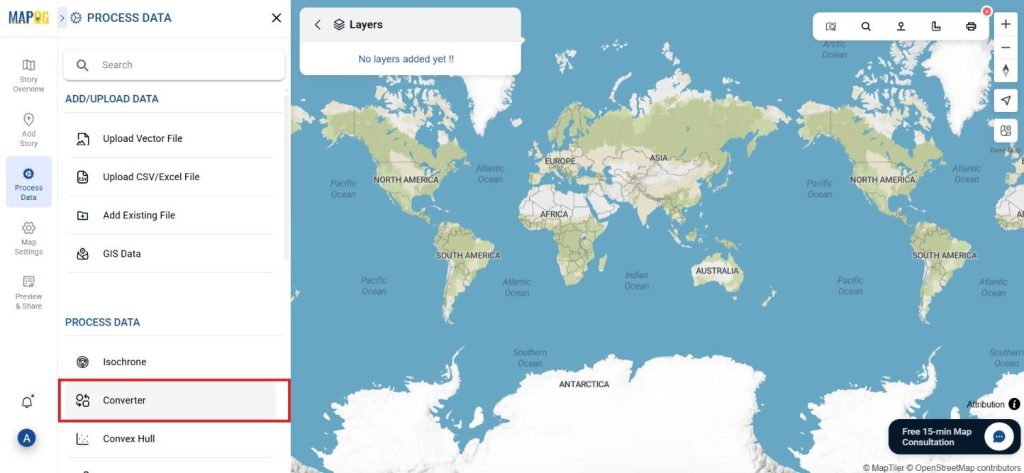
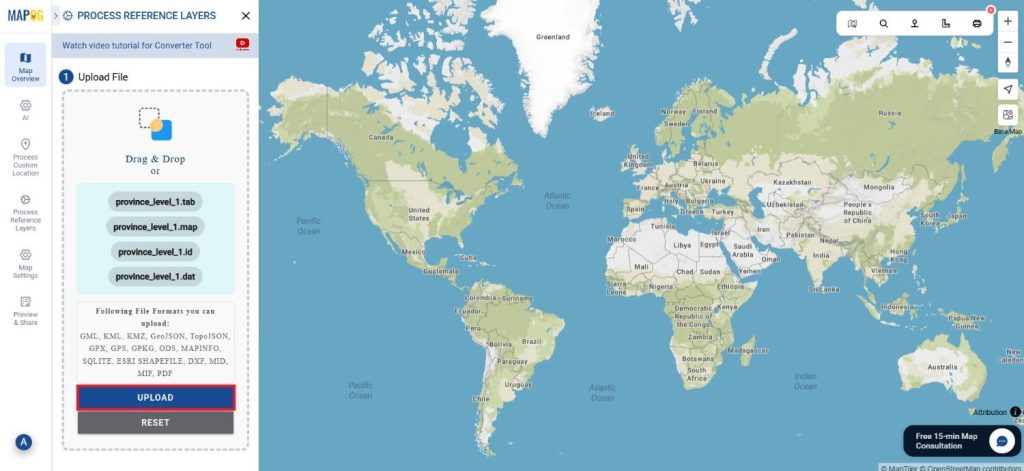
Before uploading your MapInfo file to the platform, ensure it is prepared and ready for conversion.
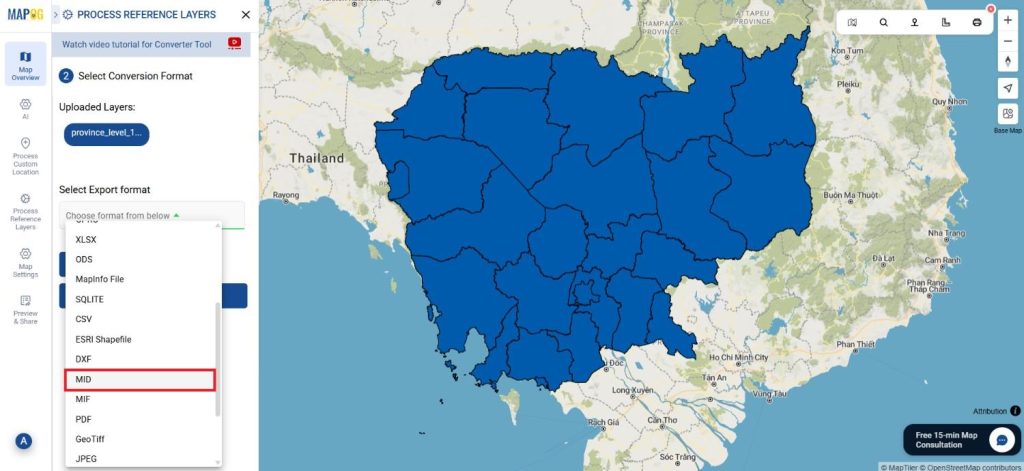
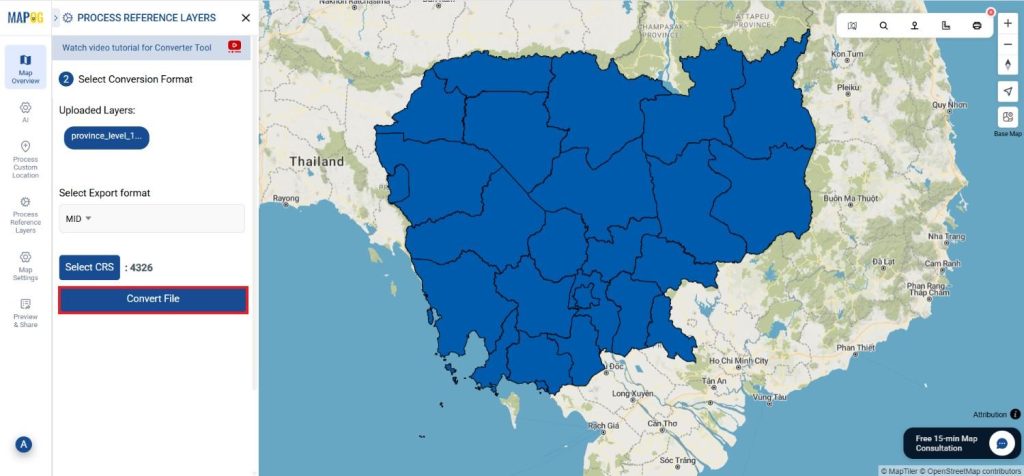
Step 2: Select the Format for Conversion
Select MID as the output format next. In order to ensure connection with a number of GIS programs that support MID formats.
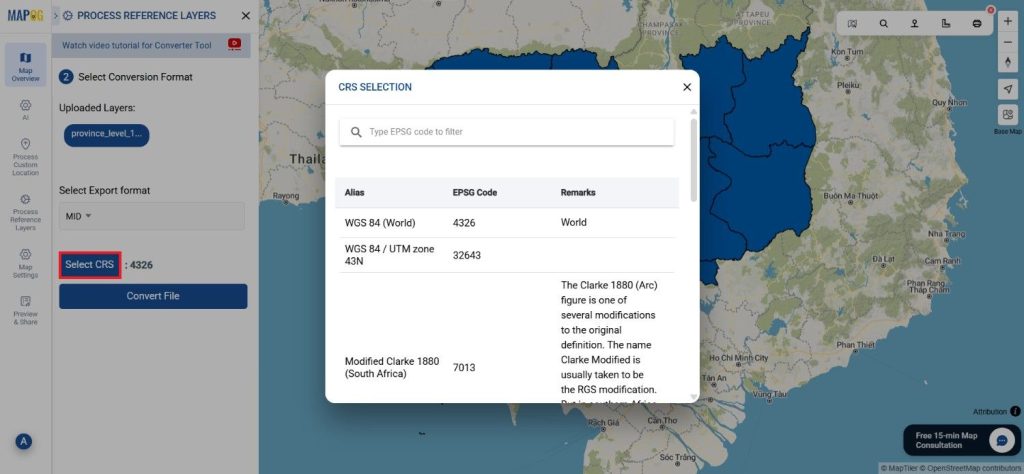
Step 3: Choose the Output Coordinate Reference System (CRS)
In this step choose the correct Output CRS.
Step 4: Execute the Conversion
Once you’ve made your selections, proceed with the conversion process. The MAPOG tool will accurately convert your MapInfo file into MID format, enabling you to store and manage your attribute data effectively.
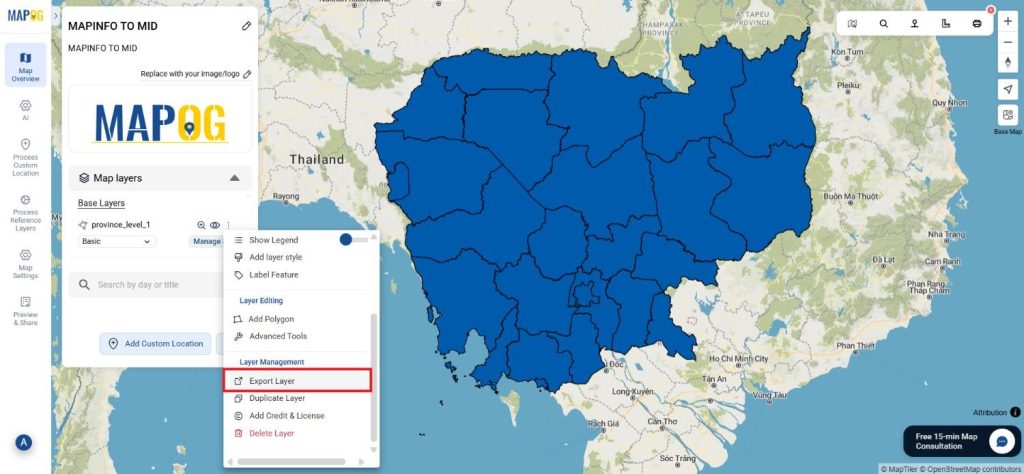
Step 5: Review and Download
Check the output after the conversion is finished appropriately. Download the MID file at the end.
Conclusion:
As a result, the MAPOG Converter Tool not only speeds up your workflow but also enhances the accessibility of your data. It streamlines file conversion, promotes efficiency, and eliminates unnecessary technical hurdles. Therefore, for any GIS professional aiming to keep data compatible and analysis-ready, this tool proves indispensable.
If you wish to download additional datasets in MapInfo or other formats such as DXF, PDF, or GPS, explore GIS DATA by MAPOG. The platform offers 900+ data layers covering over 200 countries, enabling you to enrich your spatial analysis projects even further.
Additional Tools for Further Analysis:
With MAPOG’s versatile toolkit, you can effortlessly upload vectors and upload Excel or CSV data, incorporate existing layers, perform polygon splitting, use the converter for various formats, calculate isochrones, and utilize the Export Tool.
Learn About MAPOG:
MAPOG is perfect for people who want to use visually striking and interactive maps to make their data come to life. It lets you build engaging narratives by connecting maps with visuals like text and images. Producing shareable content is made easy with MAPOG, whether you’re marketing a project, giving a tour or presenting research.
Here are some other blogs you might be interested in:
- Convert Online GIS data : KML to PDF file
- Converting KML to GeoTIFF , Online Gis Data Converter
- Converting KMZ to SHP : Online GIS Data Conversion
- Converting TopoJSON to SHP Online : GIS Data Converter
- Converting GeoJSON to TopoJSON with MAPOG
- Converting GeoJSON to CSV with MAPOG
- Converting KMZ to KML with MAPOG
- Converting GML to KML with MAPOG
- Convert KMZ to TopoJSON Online
- Converting KMZ to GeoJSON Online
- Convert KML to MID Online
- Online Conversion KML to MIF