Download Reservoir Data in Shapefile, KML, and GeoJSON Formats

Reservoirs play a crucial role in water management, energy production, and ecosystem conservation. Accessing accurate GIS data is essential for effective planning and analysis. With GIS Data by MAPOG, users can effortlessly download reservoir data in multiple formats, including Shapefile, KML, and GeoJSON. This user-friendly platform simplifies data retrieval, offering administrative and geographic datasets for detailed mapping and research.

How GIS Data by MAPOG Simplifies Data Downloading

MAPOG streamlines the process of downloading reservoir data, providing access to over 200 countries and 900+ layers. The platform supports a wide range of formats, including SHP, KML, CSV, GeoJSON, and many more formats. This ensures compatibility with various GIS applications, making it an invaluable tool for professionals and researchers.
Download Reservoir data of any countries

Note:
  • All data is provided in GCS datum EPSG:4326 WGS84 CRS (Coordinate Reference System).
  • Users need to log in to access and download their preferred data formats.

Step-by-Step Guide to Download Reservoir Data

Step 1: Search for ‘Reservoir Data’

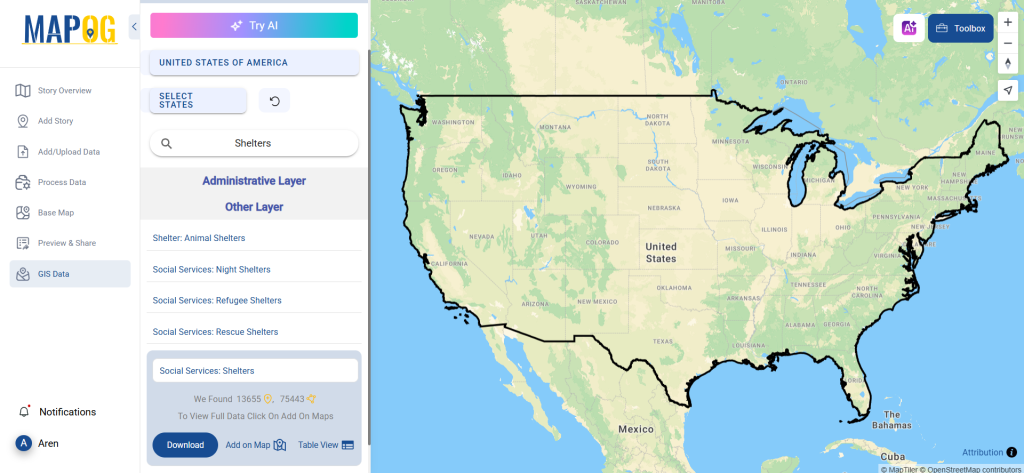
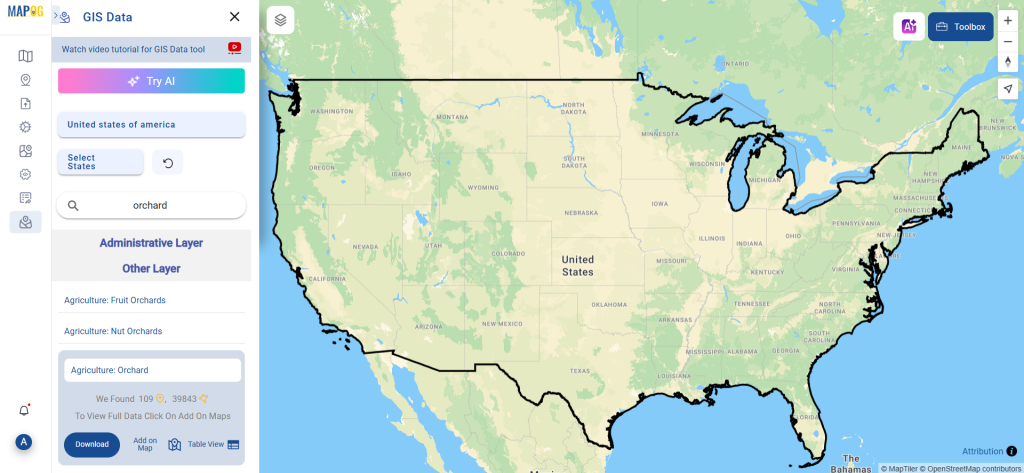
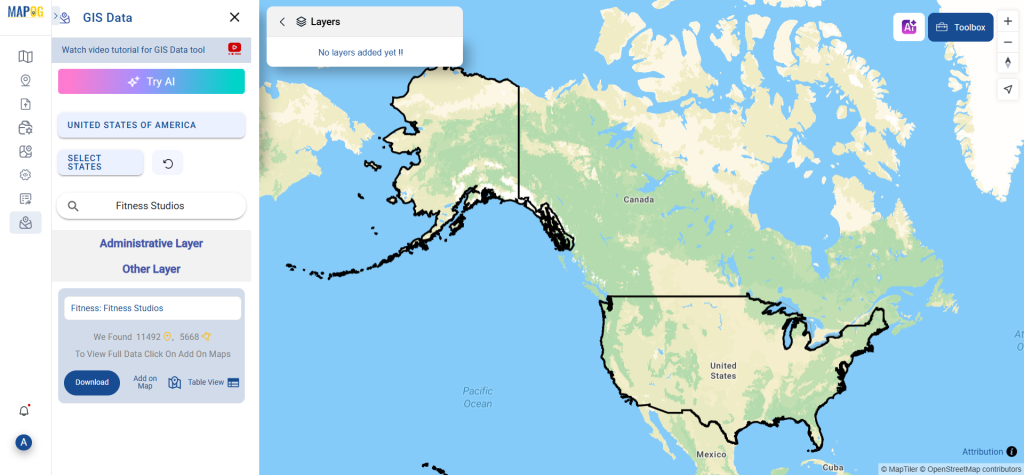
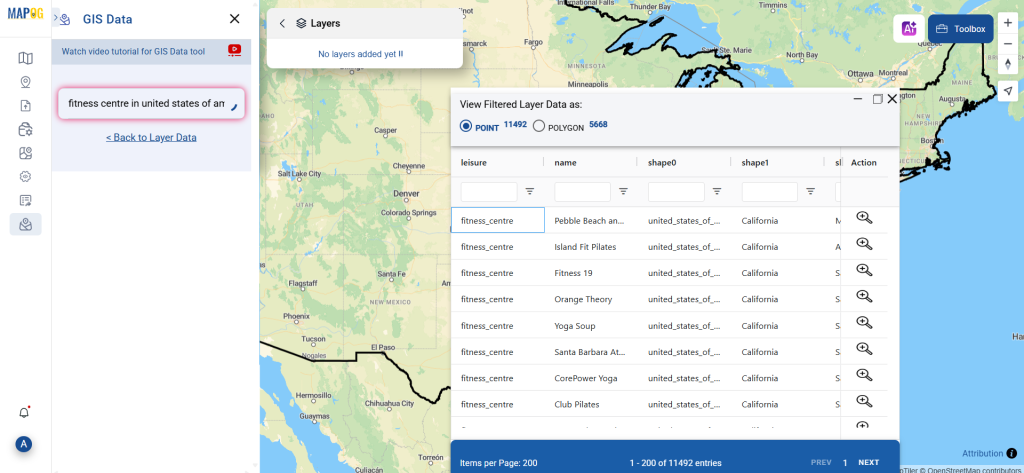
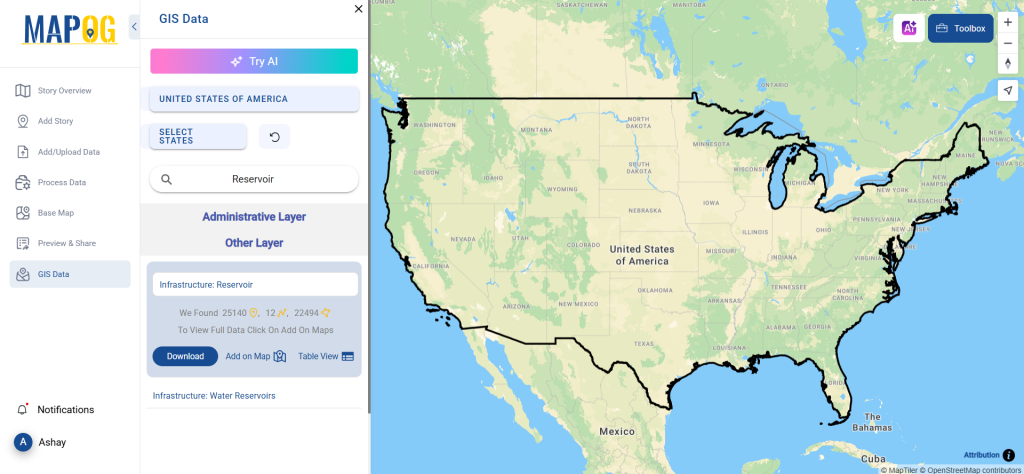
Log in to MAPOG and navigate to the GIS Data section. Select the desired country, then use the search layer option to find Reservoir data. You can check whether the data is formatted as points or polygons.

Download Reservoir Data
Download Reservoir data
Step 2: Utilize the AI Tool

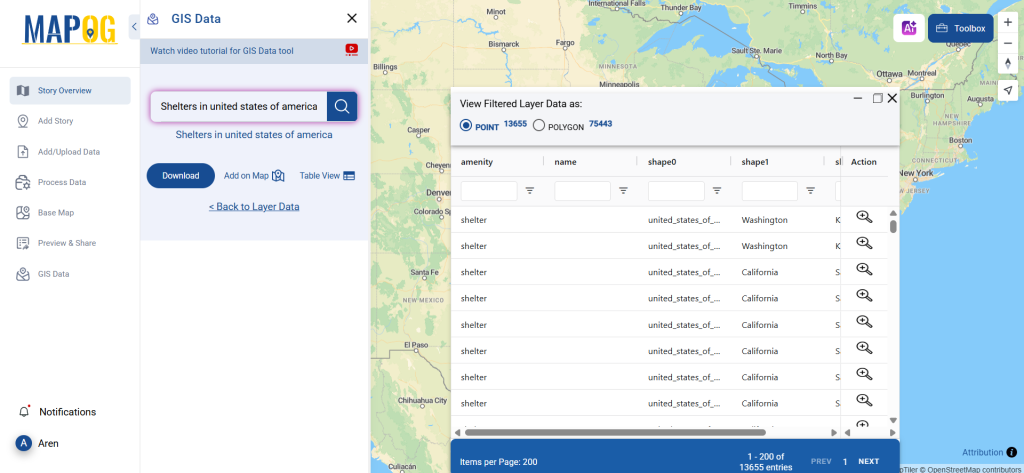
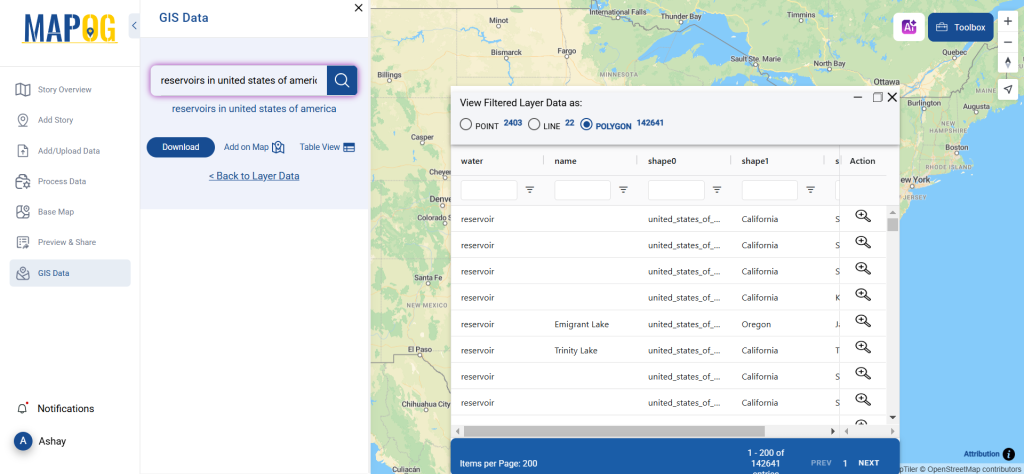
The Try AI feature in the upper left corner makes data search easier. Enter the required data type and location, and AI will quickly fetch relevant results.

Download Reservoir Data
Step 3: Apply Filters

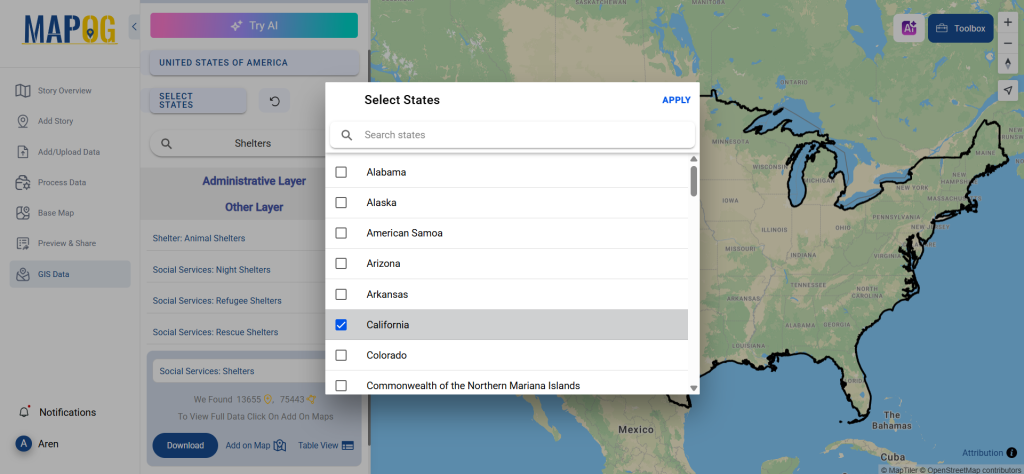
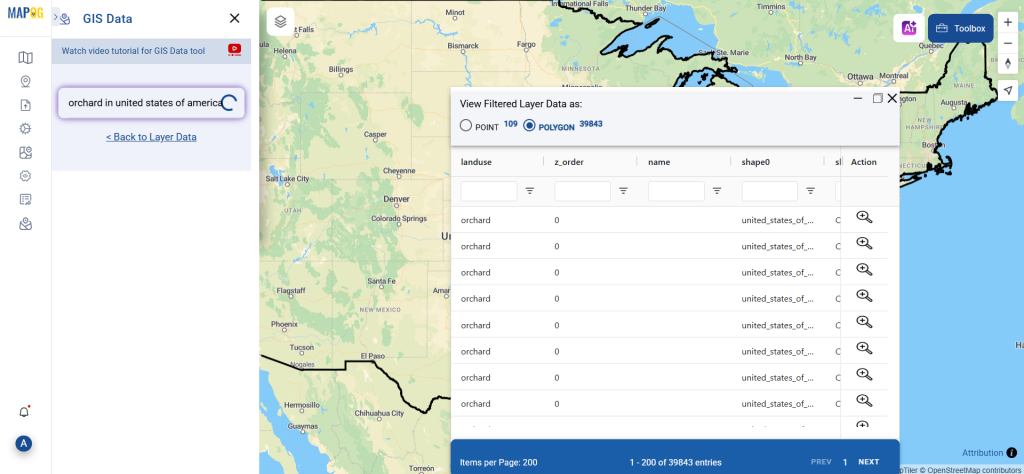
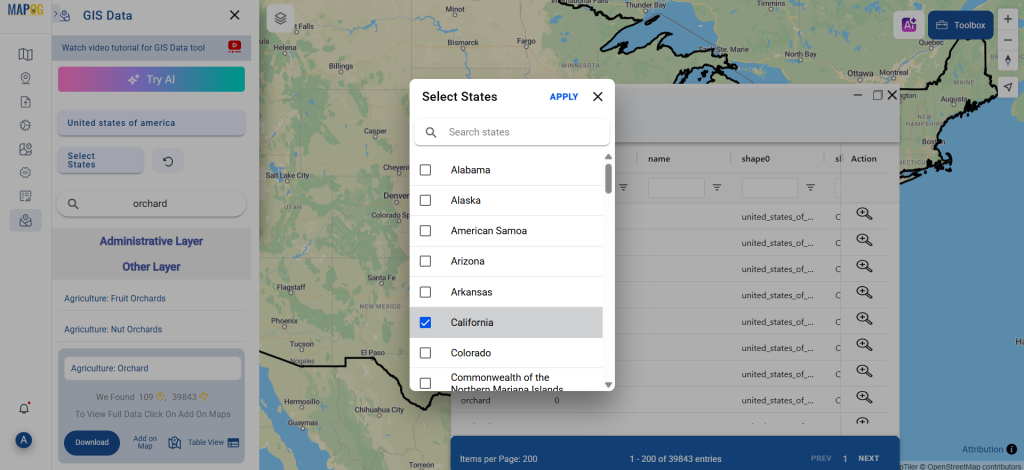
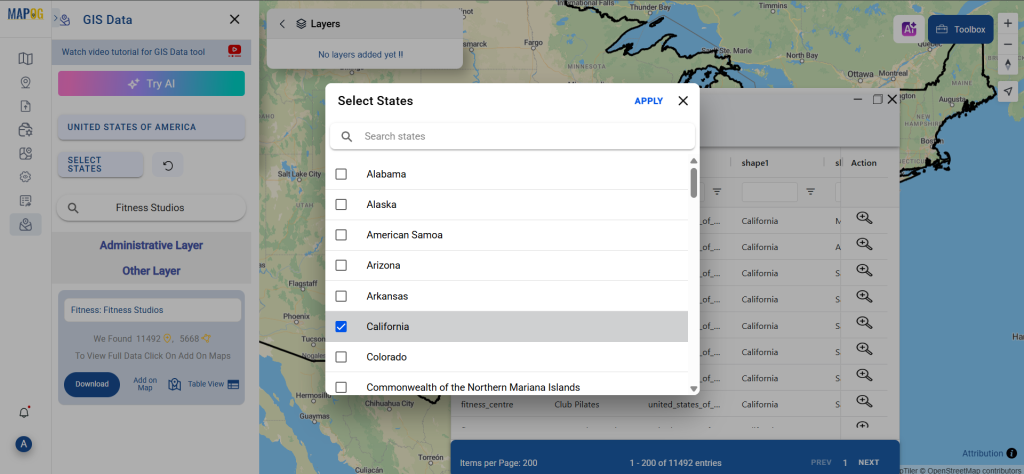
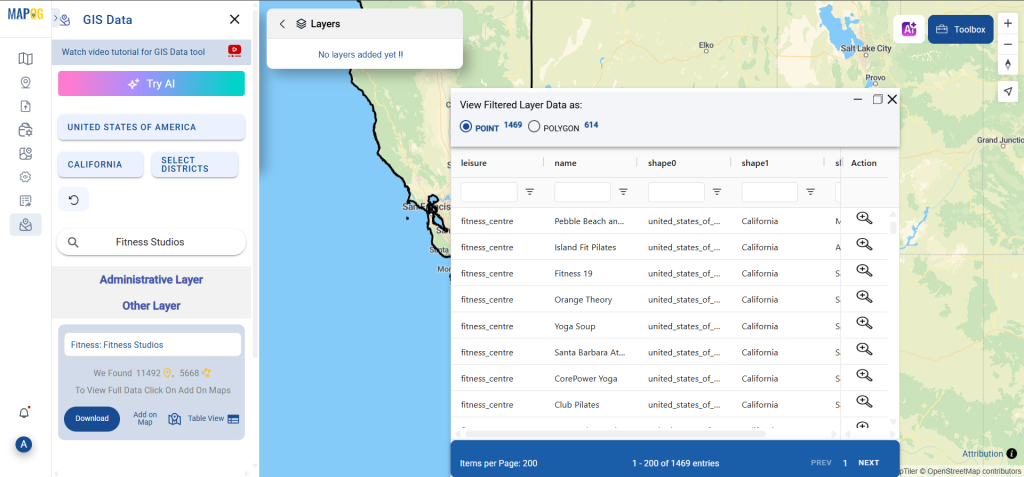
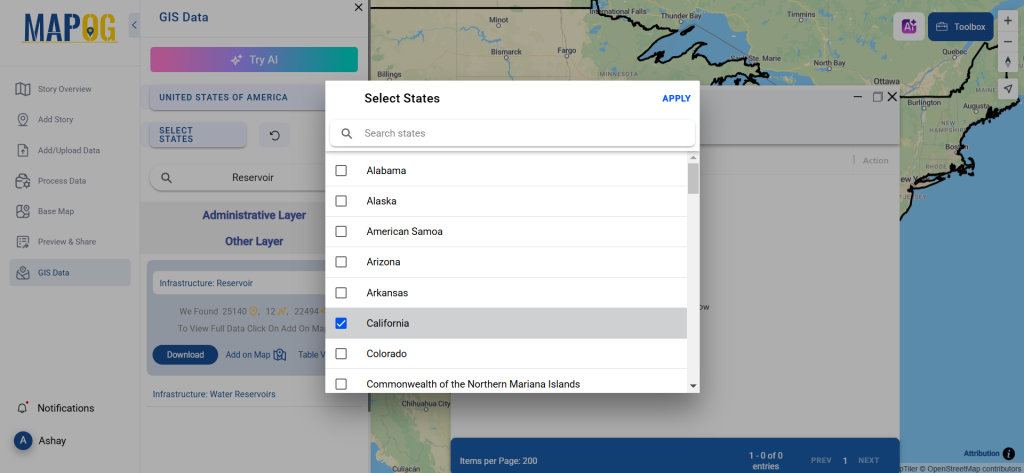
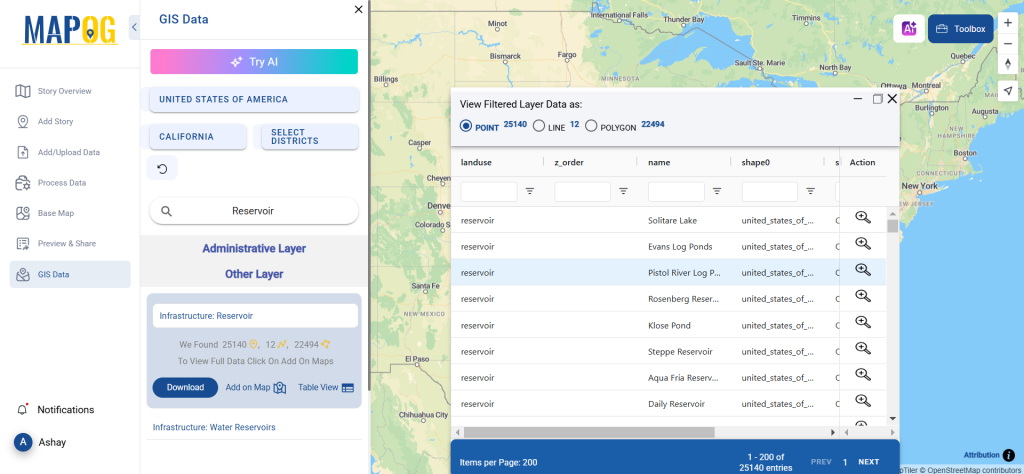
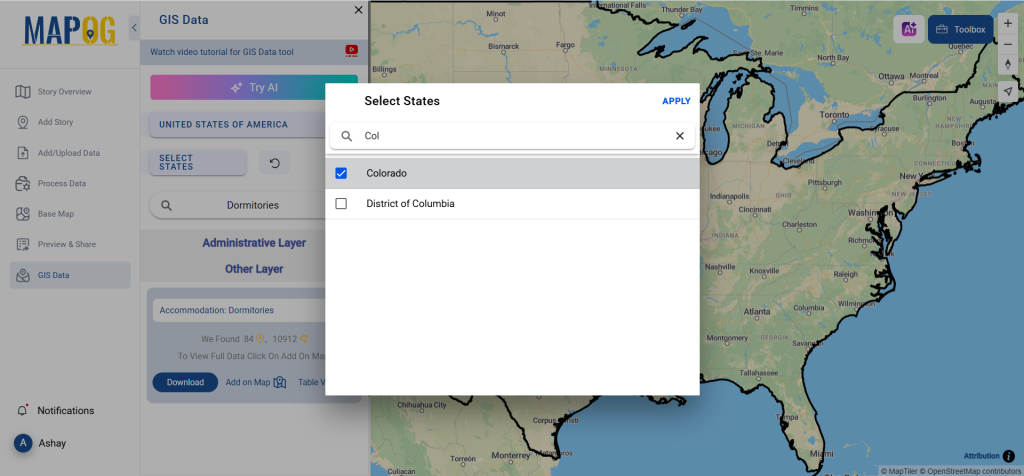
To refine your search, use the filter data option. You can narrow down results based on specific states or districts, making the dataset more precise and relevant for your project.

Download Reservoir Data
Step 4: Add Data to Map

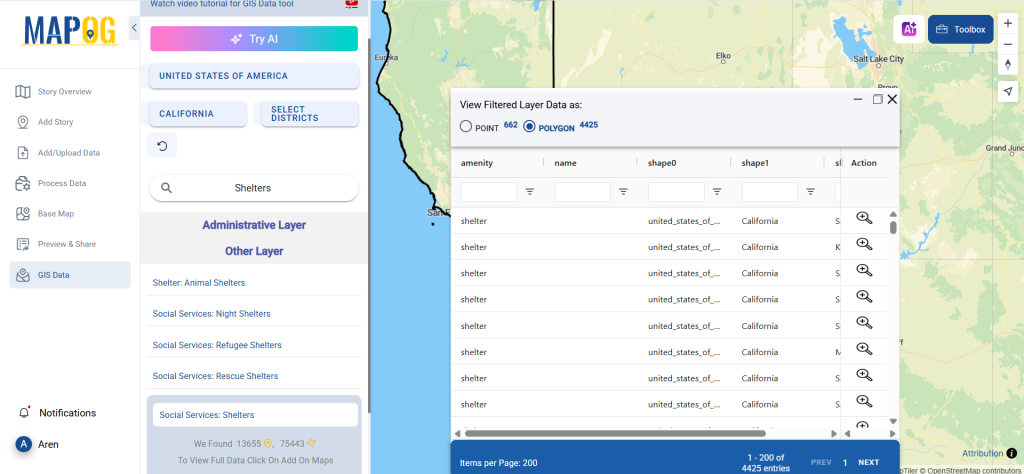
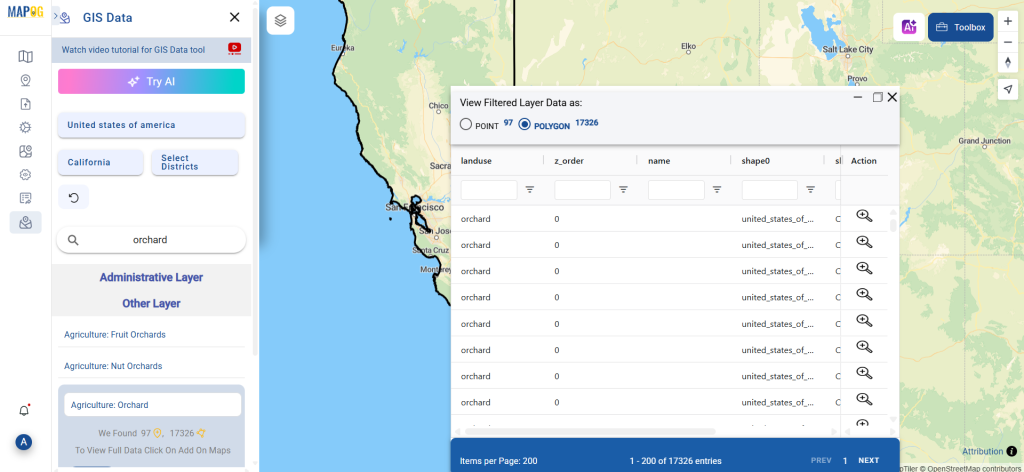
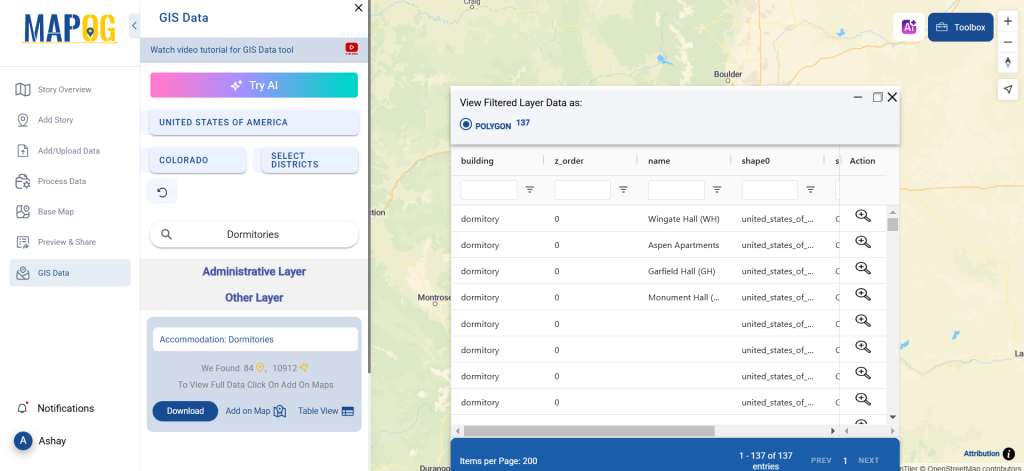
Click on ‘Add on Map’ to visualize reservoir data on an interactive map. This feature helps analyze spatial relationships and patterns, enhancing GIS analysis and decision-making.

Download Reservoir Data
Step 5: Download the Data

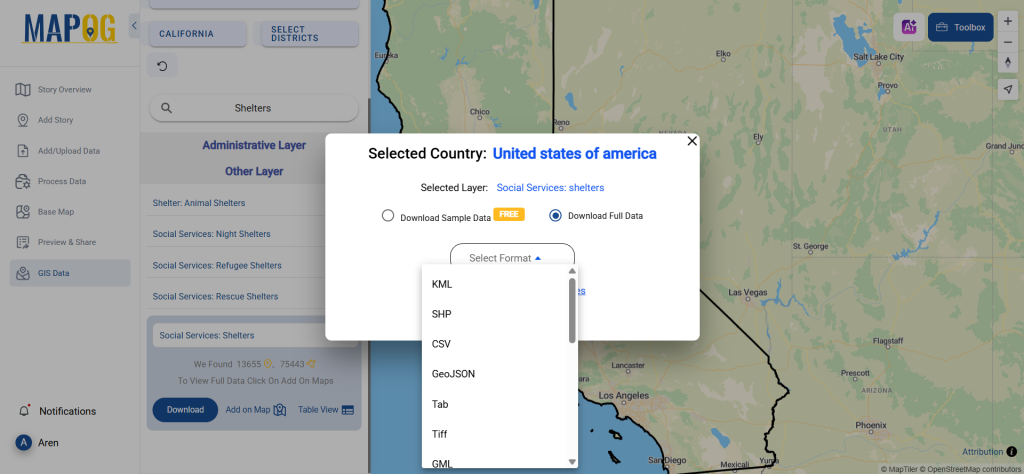
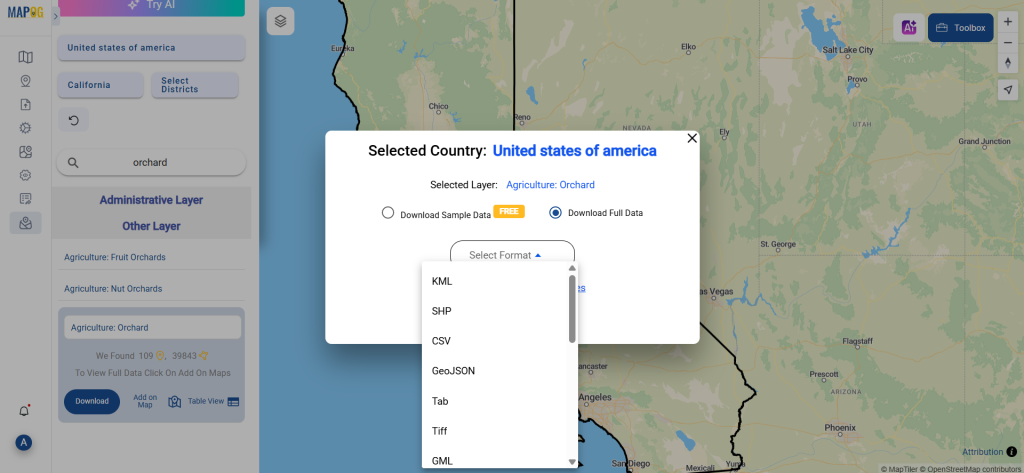
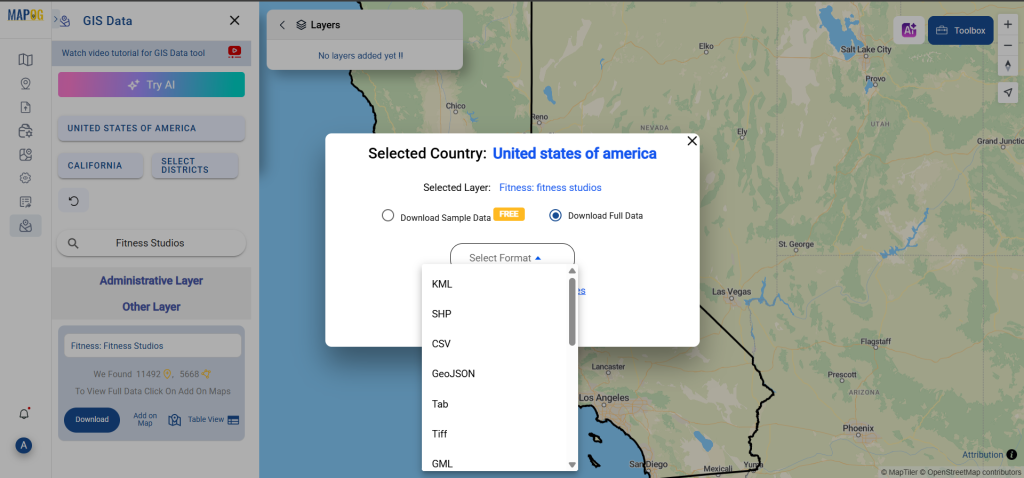
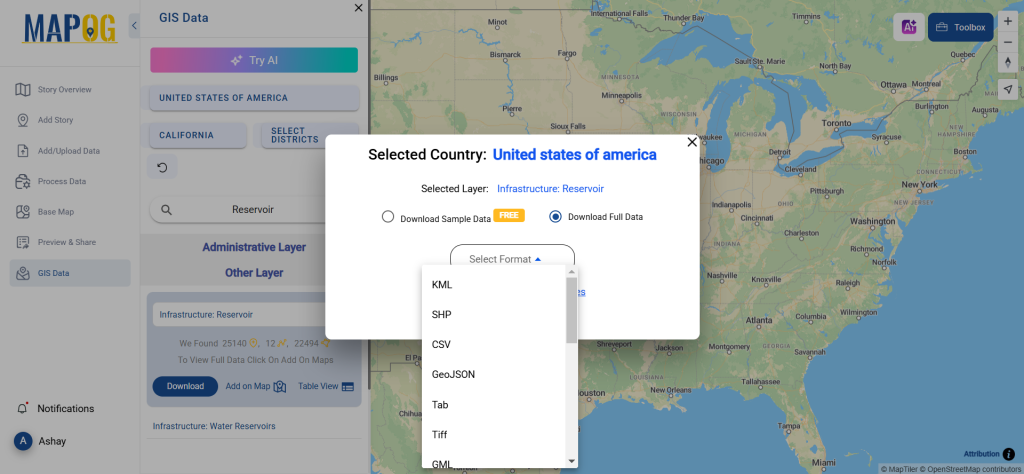
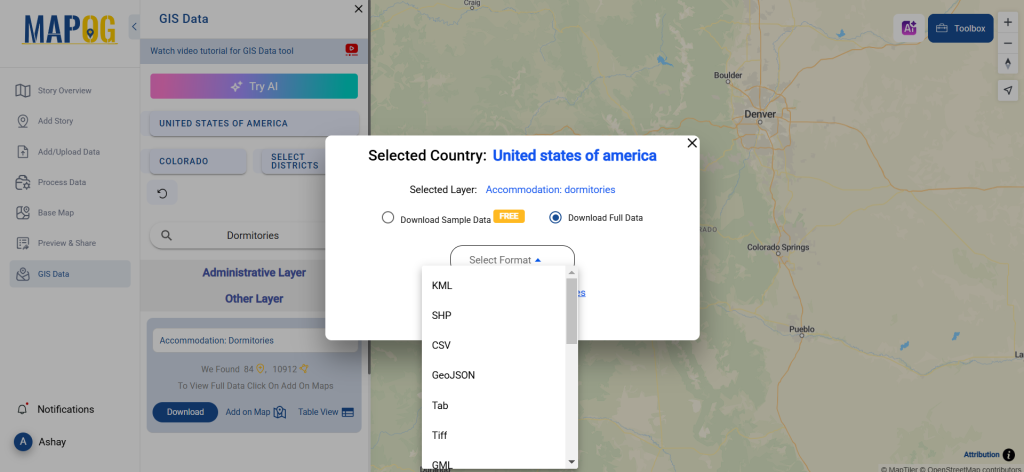
Click ‘Download Data’ and choose between a sample dataset or the full dataset. Select your preferred format, such as Shapefile, KML, or one of the 15+ available formats. Agree to the terms and conditions, then click Download to begin the process.

Download Reservoir Data

Conclusion

Using GIS Data by MAPOG, users can easily download reservoir data in multiple GIS formats for research, conservation, and planning. This platform provides up-to-date and detailed geographic data, ensuring accessibility for professionals, researchers, and enthusiasts. With its AI-assisted search, filtering options, and mapping tools, MAPOG remains a top choice for GIS data acquisition.

With MAPOG’s versatile toolkit, you can effortlessly upload vector and upload Excel or CSV data, incorporate existing layers, perform polyline splitting, use the converter for various formats, calculate isochrones, and utilize the Export Tool.

For any questions or further assistance, feel free to reach out to us at support@mapog.com. We’re here to help you make the most of your GIS data.

Download Shapefile for the following:

  1. World Countries Shapefile
  2. Australia
  3. Argentina
  4. Austria
  5. Belgium
  6. Brazil
  7. Canada
  8. Denmark
  9. Fiji
  10. Finland
  11. Germany
  12. Greece
  13. India
  14. Indonesia
  15. Ireland
  16. Italy
  17. Japan
  18. Kenya
  19. Lebanon
  20. Madagascar
  21. Malaysia
  22. Mexico
  23. Mongolia
  24. Netherlands
  25. New Zealand
  26. Nigeria
  27. Papua New Guinea
  28. Philippines
  29. Poland
  30. Russia
  31. Singapore
  32. South Africa
  33. South Korea
  34. Spain
  35. Switzerland
  36. Tunisia
  37. United Kingdom Shapefile
  38. United States of America
  39. Vietnam
  40. Croatia
  41. Chile
  42. Norway
  43. Maldives
  44. Bhutan
  45. Colombia
  46. Libya
  47. Comoros
  48. Hungary
  49. Laos
  50. Estonia
  51. Iraq
  52. Portugal
  53. Azerbaijan
  54. Macedonia
  55. Romania
  56. Peru
  57. Marshall Islands
  58. Slovenia
  59. Nauru
  60. Guatemala
  61. El Salvador
  62. Afghanistan
  63. Cyprus
  64. Syria
  65. Slovakia
  66. Luxembourg
  67. Jordan
  68. Armenia
  69. Haiti And Dominican Republic
  70. Malta
  71. Djibouti
  72. East Timor
  73. Micronesia
  74. Morocco
  75. Liberia
  76. Kosovo
  77. Isle Of Man
  78. Paraguay
  79. Tokelau
  80. Palau
  81. Ile De Clipperton
  82. Mauritius
  83. Equatorial Guinea
  84. Tonga
  85. Myanmar
  86. Thailand
  87. New Caledonia
  88. Niger
  89. Nicaragua
  90. Pakistan
  91. Nepal
  92. Seychelles
  93. Democratic Republic of the Congo
  94. China
  95. Kenya
  96. Kyrgyzstan
  97. Bosnia Herzegovina
  98. Burkina Faso
  99. Canary Island
  100. Togo
  101. Israel And Palestine
  102. Algeria
  103. Suriname
  104. Angola
  105. Cape Verde
  106. Liechtenstein
  107. Taiwan
  108. Turkmenistan
  109. Tuvalu
  110. Ivory Coast
  111. Moldova
  112. Somalia
  113. Belize
  114. Swaziland
  115. Solomon Islands
  116. North Korea
  117. Sao Tome And Principe
  118. Guyana
  119. Serbia
  120. Senegal And Gambia
  121. Faroe Islands
  122. Guernsey Jersey
  123. Monaco
  124. Tajikistan
  125. Pitcairn

Disclaimer : The GIS data provided for download in this article was initially sourced from OpenStreetMap (OSM) and further modified to enhance its usability. Please note that the original data is licensed under the Open Database License (ODbL) by the OpenStreetMap contributors. While modifications have been made to improve the data, any use, redistribution, or modification of this data must comply with the ODbL license terms. For more information on the ODbL, please visit OpenStreetMap’s License Page.

Here are some blogs you might be interested in:

Download Animal Boarding Facility Data in Shapefile, KML, and GeoJSON Formats

Download Animal Boarding Facility Data seamlessly with GIS Data by MAPOG. These facilities serve as safe spaces where animals are temporarily housed, cared for, and monitored, often during travel, emergencies, or when owners are unable to provide immediate care. MAPOG makes it simple to access accurate datasets of such facilities in multiple GIS formats, including Shapefile, KML, MID, GeoJSON, and more—ensuring compatibility with a wide range of mapping and analysis tools.

Why It Matters

Animal Boarding Facility data is crucial for urban planners, veterinary authorities, animal welfare organizations, and researchers who need insights into the distribution and accessibility of these facilities. With MAPOG, the process of locating, analyzing, and exporting this information is streamlined, making planning and analysis far more efficient.

Download Animal Boarding Facility Data of any countries

Note:
  • All data is provided in GCS datum EPSG:4326 WGS84 CRS (Coordinate Reference System).
  • Users need to log in to access and download their preferred data formats.

Step-by-Step Guide to Download Animal Boarding Facility Data

Step 1: Search for the Data

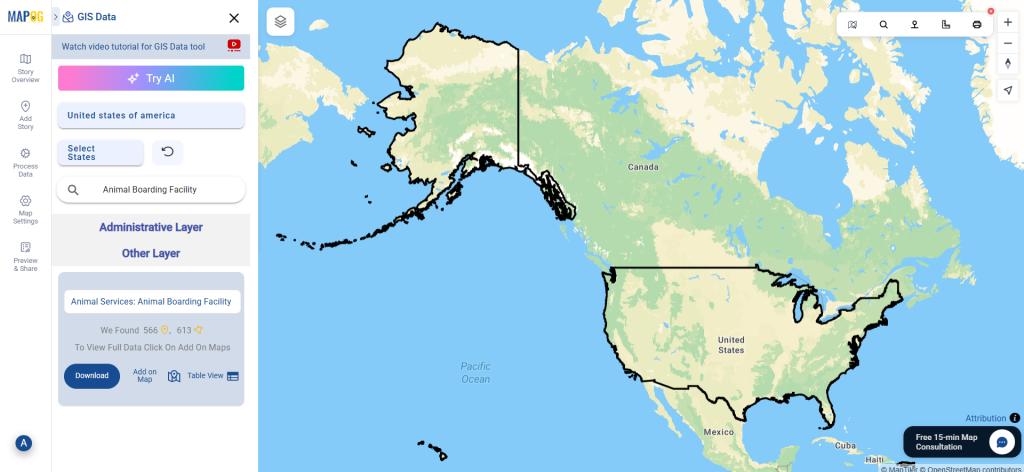
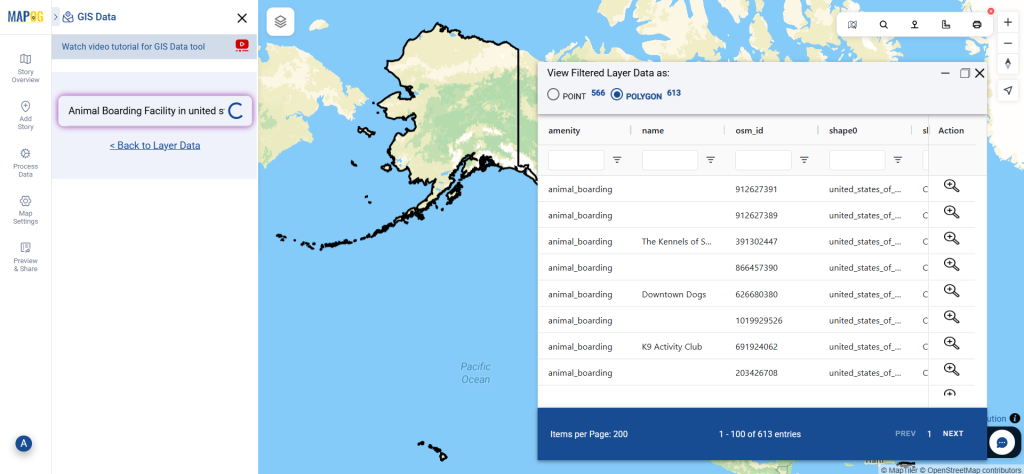
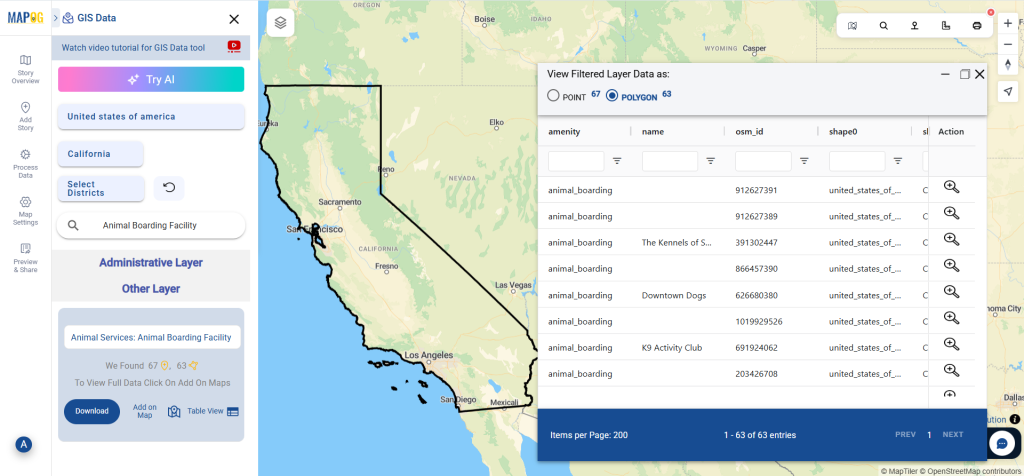
Within the MAPOG interface, use the search layer option and type “Animal Boarding.” The dataset details will display attributes such as location points or polygons, providing clarity on the type of geographic data available.

Download Animal Boarding Facility Data
Download Animal Boarding Data
Step 2: Use the AI Search Tool

MAPOG’s “Try AI” feature makes searching much faster. By entering simple keywords like “Animal Boarding Facility near area”, the AI automatically fetches relevant datasets, saving users time and minimizing manual effort.

Download Animal Boarding Facility Data
Step 3: Apply Data Filters

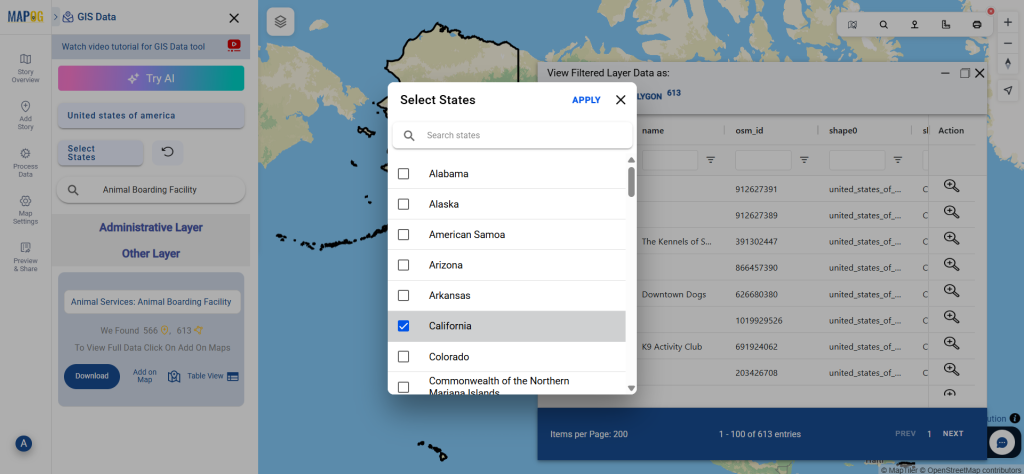
To get more refined results, apply the Filter Data option. This allows you to narrow down information to a particular state or district. For larger datasets, this feature provides deeper precision, ensuring users retrieve only the most relevant data.

Download Animal Boarding Facility Data
Step 4: Visualize with “Add on Map”

Once a dataset is located, the Add on Map option lets you overlay it directly on the interactive GIS interface. This visualization step makes it easier to understand facility distribution, coverage gaps, and accessibility before proceeding to download.

Download Animal Boarding Facility Data
Step 5: Download Animal Boarding Facility Data

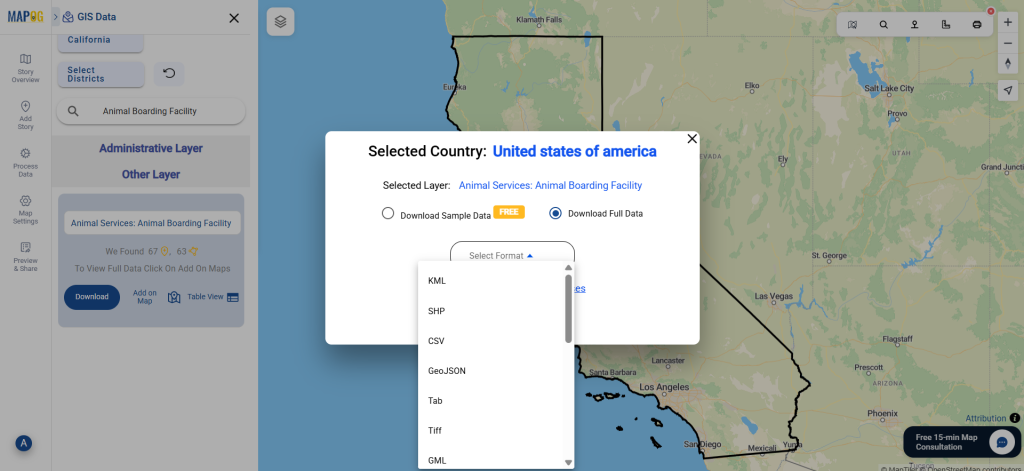
After finalizing the dataset, click Download Data. MAPOG provides flexibility to either download a sample or the complete dataset. Select your desired format—Shapefile, KML, MID, GeoJSON, or among 15+ supported GIS formats.

Download Animal Boarding Facility Data

Conclusion

With GIS Data by MAPOG, the ability to Download Animal Boarding Facility Data becomes straightforward, accurate, and highly flexible. Professionals, researchers, and planners can now access structured datasets in multiple formats to support mapping, decision-making, and analysis. Whether for welfare initiatives, emergency planning, or urban development, this platform ensures data is both reliable and ready for actionable insights.

With MAPOG’s versatile toolkit, you can effortlessly upload vector and upload Excel or CSV data, incorporate existing layers, perform Split polygon by line, use the converter for various formats, calculate isochrones, and utilize the Export Tool.

For any questions or further assistance, feel free to reach out to us at support@mapog.com. We’re here to help you make the most of your GIS data.

Download Shapefile for the following:

  1. World Countries Shapefile
  2. Australia
  3. Argentina
  4. Austria
  5. Belgium
  6. Brazil
  7. Canada
  8. Denmark
  9. Fiji
  10. Finland
  11. Germany
  12. Greece
  13. India
  14. Indonesia
  15. Ireland
  16. Italy
  17. Japan
  18. Kenya
  19. Lebanon
  20. Madagascar
  21. Malaysia
  22. Mexico
  23. Mongolia
  24. Netherlands
  25. New Zealand
  26. Nigeria
  27. Papua New Guinea
  28. Philippines
  29. Poland
  30. Russia
  31. Singapore
  32. South Africa
  33. South Korea
  34. Spain
  35. Switzerland
  36. Tunisia
  37. United Kingdom Shapefile
  38. United States of America
  39. Vietnam
  40. Croatia
  41. Chile
  42. Norway
  43. Maldives
  44. Bhutan
  45. Colombia
  46. Libya
  47. Comoros
  48. Hungary
  49. Laos
  50. Estonia
  51. Iraq
  52. Portugal
  53. Azerbaijan
  54. Macedonia
  55. Romania
  56. Peru
  57. Marshall Islands
  58. Slovenia
  59. Nauru
  60. Guatemala
  61. El Salvador
  62. Afghanistan
  63. Cyprus
  64. Syria
  65. Slovakia
  66. Luxembourg
  67. Jordan
  68. Armenia
  69. Haiti And Dominican Republic
  70. Malta
  71. Djibouti
  72. East Timor
  73. Micronesia
  74. Morocco
  75. Liberia
  76. Kosovo
  77. Isle Of Man
  78. Paraguay
  79. Tokelau
  80. Palau
  81. Ile De Clipperton
  82. Mauritius
  83. Equatorial Guinea
  84. Tonga
  85. Myanmar
  86. Thailand
  87. New Caledonia
  88. Niger
  89. Nicaragua
  90. Pakistan
  91. Nepal
  92. Seychelles
  93. Democratic Republic of the Congo
  94. China
  95. Kenya
  96. Kyrgyzstan
  97. Bosnia Herzegovina
  98. Burkina Faso
  99. Canary Island
  100. Togo
  101. Israel And Palestine
  102. Algeria
  103. Suriname
  104. Angola
  105. Cape Verde
  106. Liechtenstein
  107. Taiwan
  108. Turkmenistan
  109. Tuvalu
  110. Ivory Coast
  111. Moldova
  112. Somalia
  113. Belize
  114. Swaziland
  115. Solomon Islands
  116. North Korea
  117. Sao Tome And Principe
  118. Guyana
  119. Serbia
  120. Senegal And Gambia
  121. Faroe Islands
  122. Guernsey Jersey
  123. Monaco
  124. Tajikistan
  125. Pitcairn

Disclaimer : The GIS data provided for download in this article was initially sourced from OpenStreetMap (OSM) and further modified to enhance its usability. Please note that the original data is licensed under the Open Database License (ODbL) by the OpenStreetMap contributors. While modifications have been made to improve the data, any use, redistribution, or modification of this data must comply with the ODbL license terms. For more information on the ODbL, please visit OpenStreetMap’s License Page.

Here are some blogs you might be interested in:

Dormitories Data Download for GIS, Urban Planning & Student Housing Analysis

Looking for an easy way to download dormitories data? GIS Data by MAPOG makes it simple! This user-friendly platform provides access to various GIS formats like Shapefile, KML, GeoJSON, and more. Whether you need dormitory locations for urban planning, student housing analysis, or real estate development, MAPOG offers accurate geographic data.

Why Use GIS Data by MAPOG?

With over 200 countries and 900+ layers, this platform allows seamless downloading of administrative and geographic datasets, enabling detailed mapping and spatial analysis in MAPOG. The available formats ensure compatibility with popular GIS tools for better decision-making.

Download Dormitories data of any countries

Note:
  • All data is provided in GCS datum EPSG:4326 WGS84 CRS (Coordinate Reference System).
  • Users need to log in to access and download their preferred data formats.

Step-by-Step Guide to Download Dormitories Data

Step 1: Search for ‘Dormitories Data’

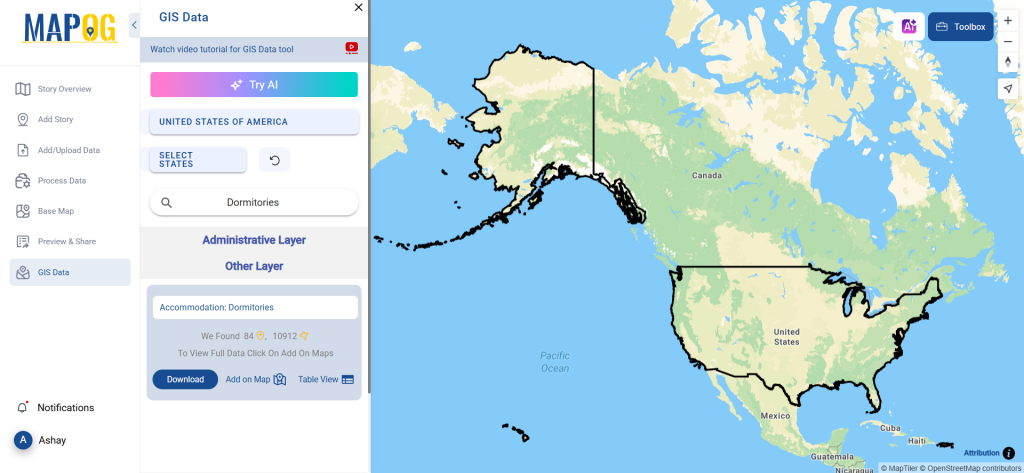
After logging into GIS Data by MAPOG, select the country of interest. Use the search layer option to locate Dormitories data. These can include university dormitories, hostel networks, and workforce housing. You can also review the data format, whether point-based or polygon-based.

Download Dormitories Data
Download Dormitories data
Step 2: Use the AI Search Tool

MAPOG’s AI-powered search tool, found in the upper left corner, makes finding the right data even easier. Just enter keywords like ‘Dormitories in New York’ or ‘University Housing in Germany’, and the tool will fetch the most relevant re

Download Dormitories Data
Step 3: Apply Filters for Precision

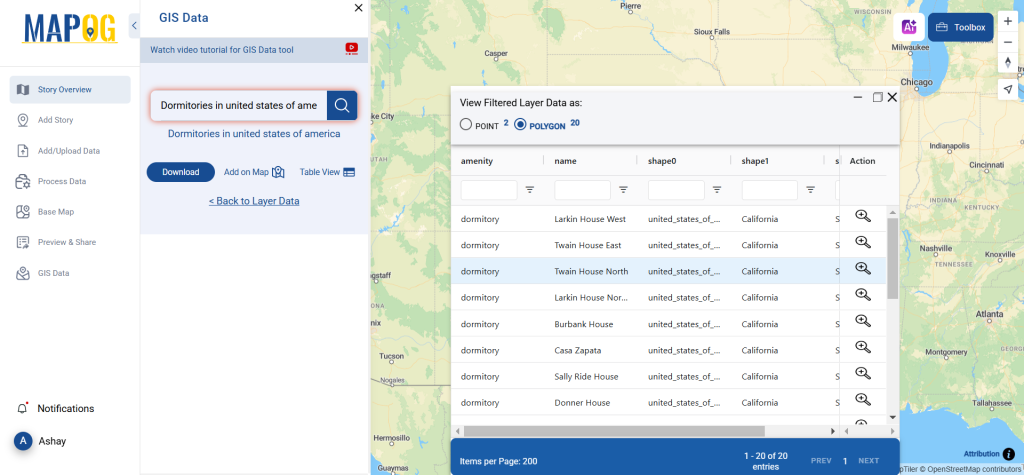
Narrow down your search using the filter data option. You can refine dormitory data based on location, state, district, or proximity to universities. This helps focus on specific areas, making mapping more precise and insightful.

Download Dormitories Data
Step 4: Add Data to Map for Analysis

Use the ‘Add on Map’ feature to visualize dormitory locations on an interactive map. This allows users to analyze spatial relationships, proximity to public transport, and surrounding infrastructure. The ability to integrate multiple layers makes GIS projects more robust.

Download Dormitories Data
Step 5: Download Dormitories Data in Multiple Formats

Click the ‘Download Data’ button to obtain the required dataset. Choose between sample data or the full dataset. Select from 15+ GIS formats like Shapefile (SHP), KML, GeoJSON, SQL, DXF, MIF, MID, and more. Agree to the terms, then hit download.

Download Dormitories Data

Conclusion

With GIS Data by MAPOG, you can download dormitories data effortlessly for spatial analysis, city planning, or student accommodation research. The platform offers high-quality data in multiple formats, ensuring compatibility with leading GIS applications. Whether you’re a real estate developer, urban planner, or academic researcher, MAPOG provides reliable dormitory data for smarter decision-making. Start mapping dormitories today!

With MAPOG’s versatile toolkit, you can effortlessly upload vector and upload Excel or CSV data, incorporate existing layers, perform polyline splitting, use the converter for various formats, calculate isochrones, and utilize the Export Tool.

For any questions or further assistance, feel free to reach out to us at support@mapog.com. We’re here to help you make the most of your GIS data.

Download Shapefile for the following:

  1. World Countries Shapefile
  2. Australia
  3. Argentina
  4. Austria
  5. Belgium
  6. Brazil
  7. Canada
  8. Denmark
  9. Fiji
  10. Finland
  11. Germany
  12. Greece
  13. India
  14. Indonesia
  15. Ireland
  16. Italy
  17. Japan
  18. Kenya
  19. Lebanon
  20. Madagascar
  21. Malaysia
  22. Mexico
  23. Mongolia
  24. Netherlands
  25. New Zealand
  26. Nigeria
  27. Papua New Guinea
  28. Philippines
  29. Poland
  30. Russia
  31. Singapore
  32. South Africa
  33. South Korea
  34. Spain
  35. Switzerland
  36. Tunisia
  37. United Kingdom Shapefile
  38. United States of America
  39. Vietnam
  40. Croatia
  41. Chile
  42. Norway
  43. Maldives
  44. Bhutan
  45. Colombia
  46. Libya
  47. Comoros
  48. Hungary
  49. Laos
  50. Estonia
  51. Iraq
  52. Portugal
  53. Azerbaijan
  54. Macedonia
  55. Romania
  56. Peru
  57. Marshall Islands
  58. Slovenia
  59. Nauru
  60. Guatemala
  61. El Salvador
  62. Afghanistan
  63. Cyprus
  64. Syria
  65. Slovakia
  66. Luxembourg
  67. Jordan
  68. Armenia
  69. Haiti And Dominican Republic
  70. Malta
  71. Djibouti
  72. East Timor
  73. Micronesia
  74. Morocco
  75. Liberia
  76. Kosovo
  77. Isle Of Man
  78. Paraguay
  79. Tokelau
  80. Palau
  81. Ile De Clipperton
  82. Mauritius
  83. Equatorial Guinea
  84. Tonga
  85. Myanmar
  86. Thailand
  87. New Caledonia
  88. Niger
  89. Nicaragua
  90. Pakistan
  91. Nepal
  92. Seychelles
  93. Democratic Republic of the Congo
  94. China
  95. Kenya
  96. Kyrgyzstan
  97. Bosnia Herzegovina
  98. Burkina Faso
  99. Canary Island
  100. Togo
  101. Israel And Palestine
  102. Algeria
  103. Suriname
  104. Angola
  105. Cape Verde
  106. Liechtenstein
  107. Taiwan
  108. Turkmenistan
  109. Tuvalu
  110. Ivory Coast
  111. Moldova
  112. Somalia
  113. Belize
  114. Swaziland
  115. Solomon Islands
  116. North Korea
  117. Sao Tome And Principe
  118. Guyana
  119. Serbia
  120. Senegal And Gambia
  121. Faroe Islands
  122. Guernsey Jersey
  123. Monaco
  124. Tajikistan
  125. Pitcairn

Disclaimer : The GIS data provided for download in this article was initially sourced from OpenStreetMap (OSM) and further modified to enhance its usability. Please note that the original data is licensed under the Open Database License (ODbL) by the OpenStreetMap contributors. While modifications have been made to improve the data, any use, redistribution, or modification of this data must comply with the ODbL license terms. For more information on the ODbL, please visit OpenStreetMap’s License Page.

Here are some blogs you might be interested in:

Convert SQLITE to DXF: A Step-by-Step Guide

This tutorial provides a clear and detailed walkthrough for converting a SQLITE file into DXF format using the Converter Tool in MAPOG. Whether you’re a beginner or have some experience with MAPOG, this guide will help you smoothly convert your SQLITE files to DXF.

What is SQLITE Data Format:

A file with .sqlite extension is a lightweight SQL database file created with the SQLITE software. It is a database in a file itself and implements a self-contained, full-featured, highly-reliable SQL database engine. SQLITE database files can be used to share rich contents between systems by simple exchanging these files over the network. Almost all mobiles and computers use SQLITE for storing and sharing of data, and is the choice of file format for cross-platform applications. Due to its compact use and easy usability, it comes bundled inside other applications. SQLITE bindings exist for programming languages such as C, C#, C++, Java, PHP, and many others.

Online GIS Data Conversion

Converting SQLITE Data into DXF Format:

Converter Tool in MAPOG enables users to seamlessly convert data between different formats based on their specific needs. This tool simplifies the data transformation process for a variety of GIS applications, ensuring both flexibility and efficiency when working with multiple file types. For instance, MAPOG’s Converter Tool can convert SQLITE data into DXF format, reducing file size while preserving essential geographic information. This conversion improves the data’s compatibility with online mapping and interactive platforms, ultimately enhancing workflows and significantly increasing GIS data usability.

                      Steps to Convert SQLITE to DXF:

Step 1: Upload the Data:

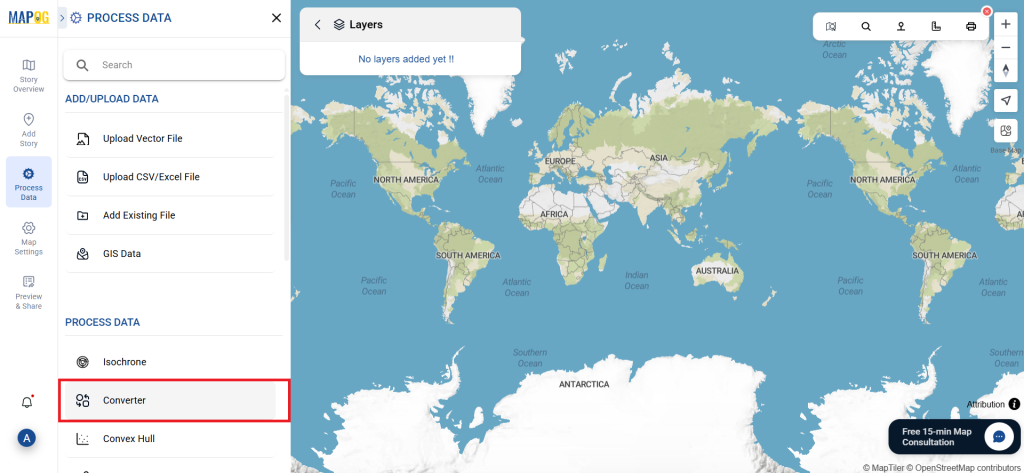
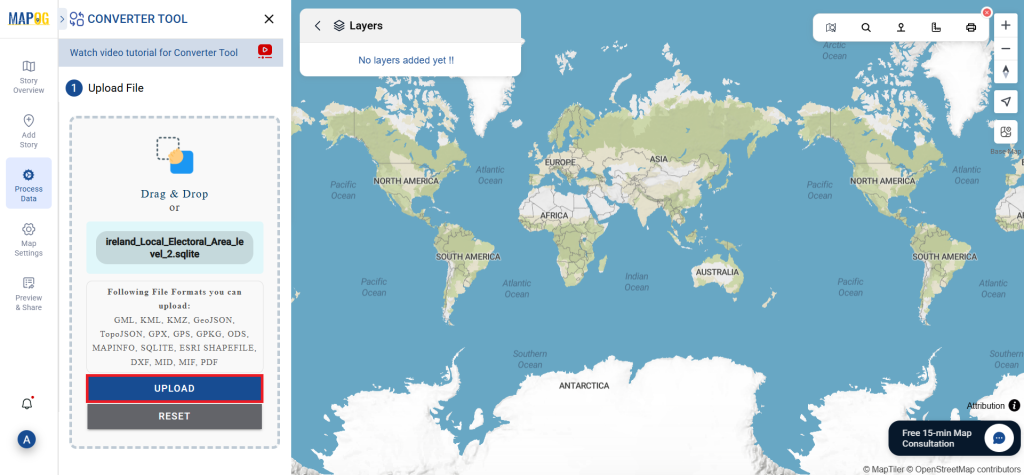
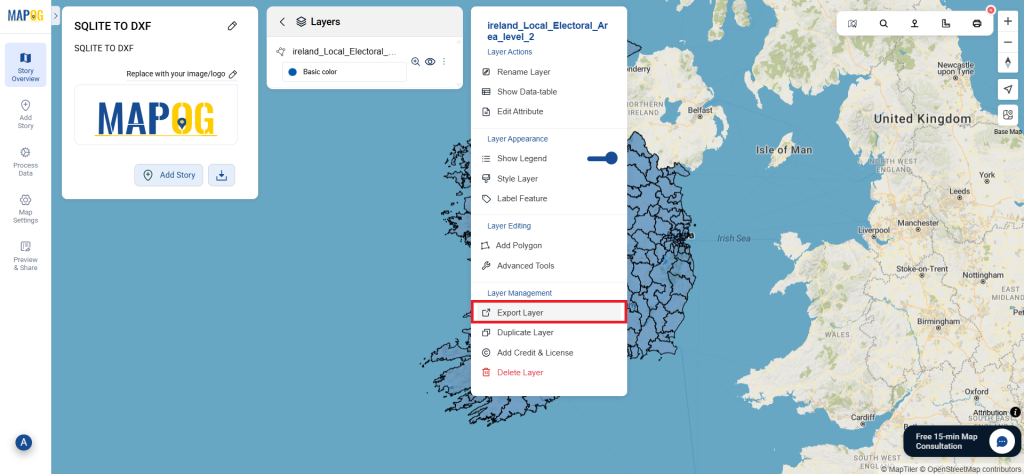
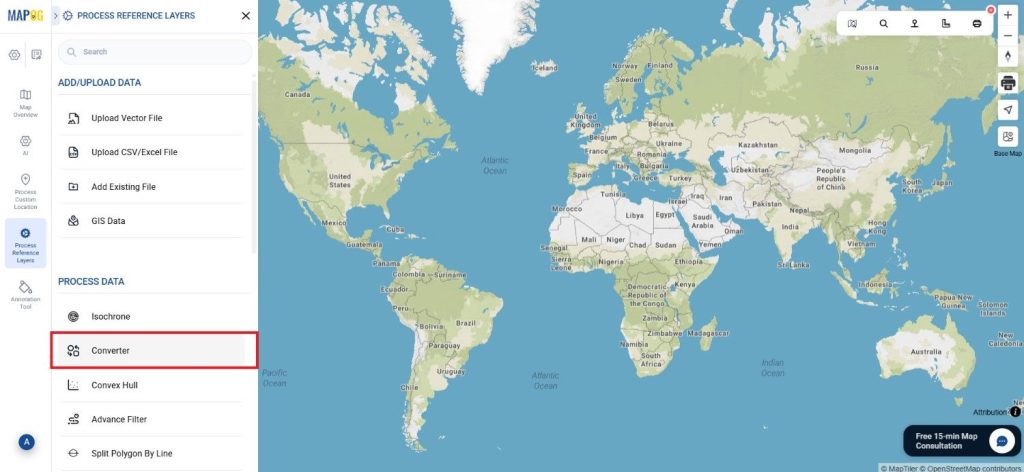
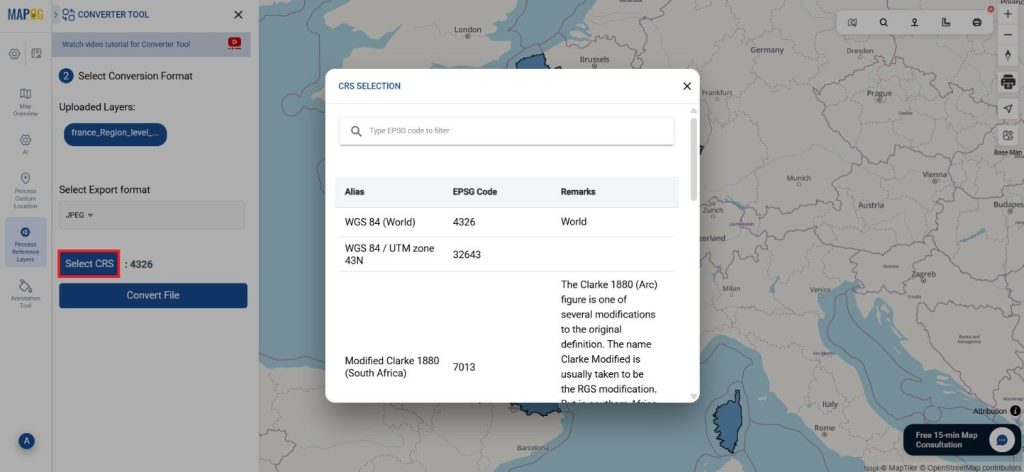
Navigate to the header menu, click on “Process Data,” and then choose the “Converter Tool” option to begin.

SQLITE to DXF

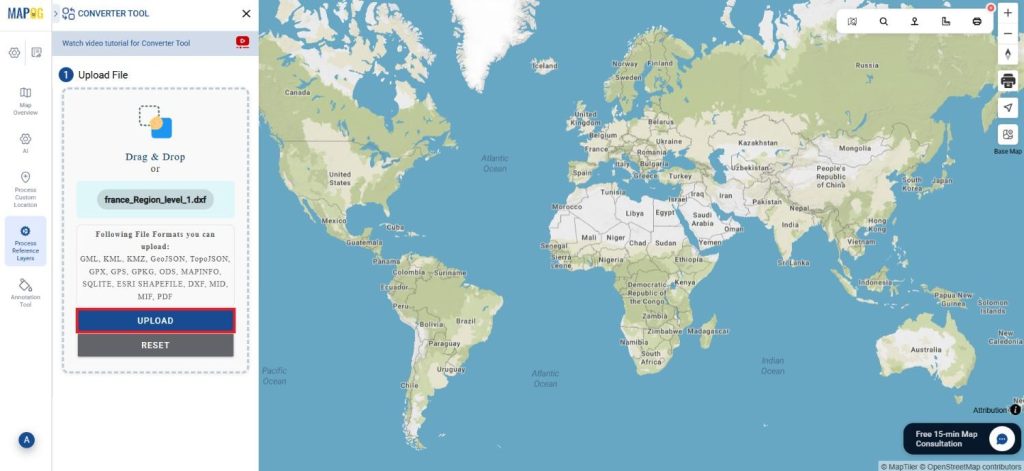
2.To start the conversion, upload your SQLITE file by selecting the data you want to convert.

SQLITE to DXF
Step 2: Choose the Output Format

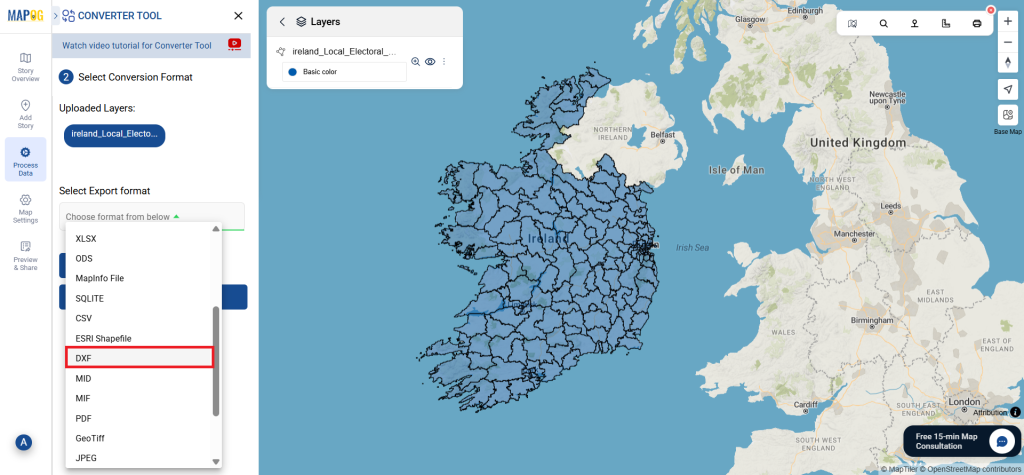
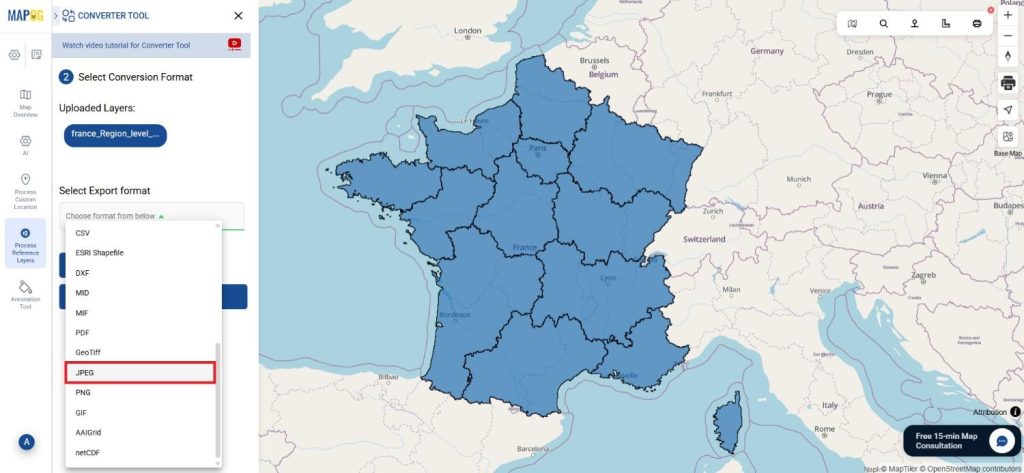
1.Set DXF as the desired output format for your data export. While the Converter Tool provides various format options, this guide is specifically dedicated to converting your file into the DXF format.

SQLITE to DXF

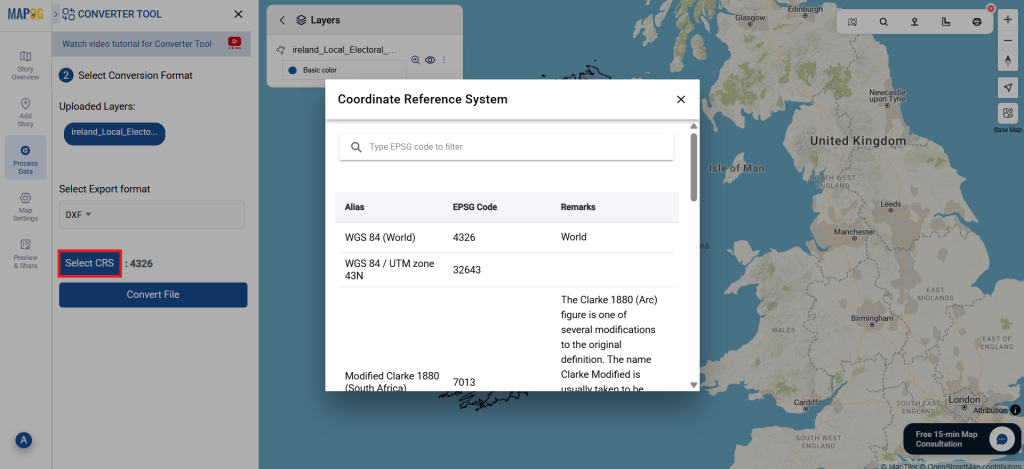
2. You can also Choose the Output Coordinate Reference System (CRS) according to your spatial analysis requirement.

SQLITE to DXF
Step 3: Execute the Conversion:

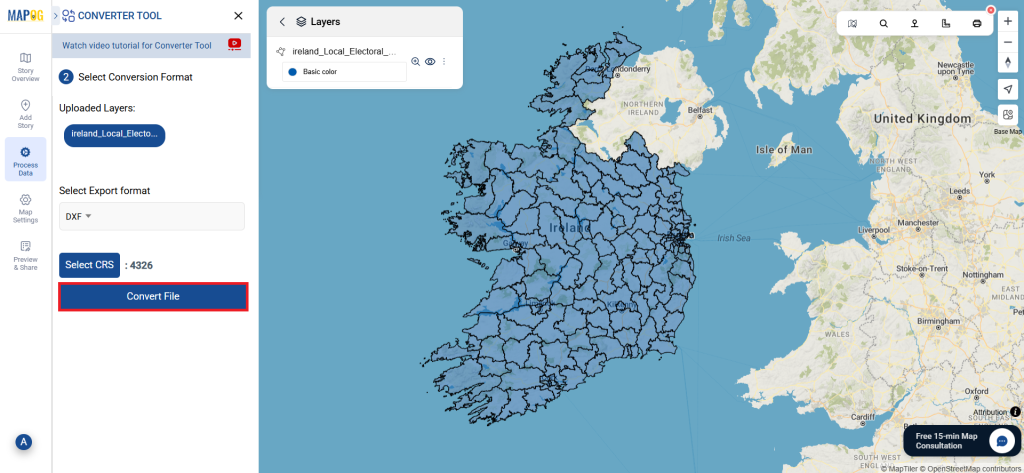
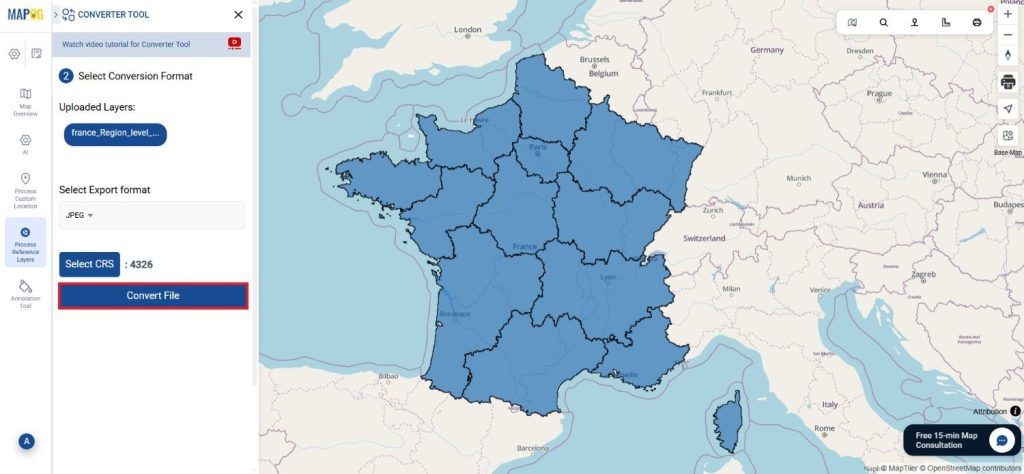
Head over to the ‘Convert Files’ section, and allow the tool to handle the conversion process for you. Just upload your SQLITE file, and the Converter Tool will seamlessly transform it into DXF format, making the conversion quick and easy.

SQLITE to DXF
Step 4: Review and Download:

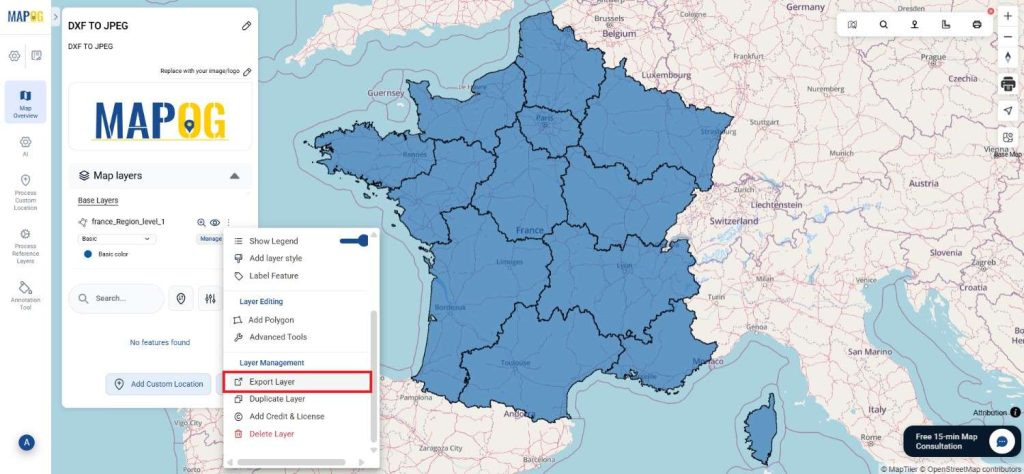
Review your converted DXF file to confirm its accuracy. After ensuring that the conversion is correct and meets your requirements, proceed to download the file. This step is crucial to validate that the conversion was successful and that your data has been accurately preserved.

SQLITE to DXF
Additional Tools for Further Analysis:

With MAPOG’s versatile toolkit, you can effortlessly upload vectors and upload Excel or CSV data, incorporate existing layers, perform polygon splitting, use the converter for various formats, calculate isochrones, and utilize the Export Tool.

These blogs may also be useful for you:

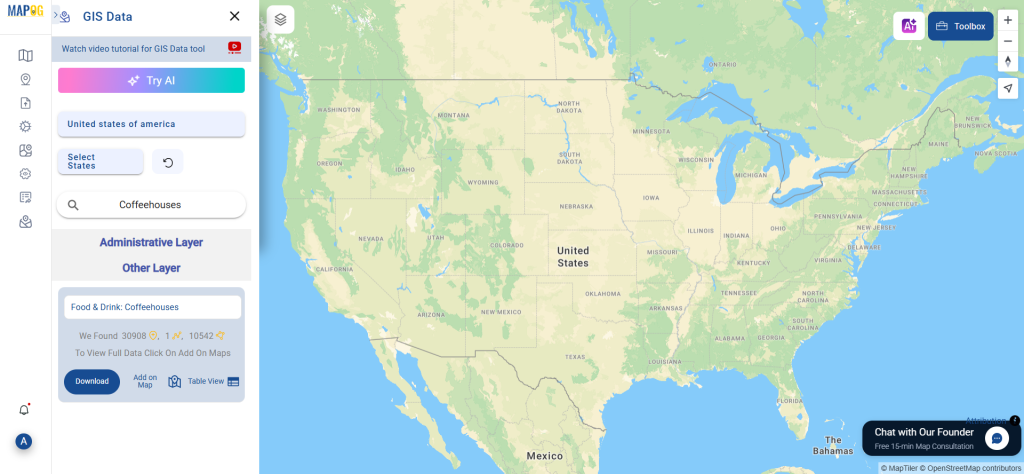
Download Coffeehouses GIS Data: Complete Guide for Planners & Analysts

Looking to analyze the spread and accessibility of coffeehouses for commercial, urban planning, or tourism purposes? Download Coffeehouses Data effortlessly using the GIS Data by MAPOG platform. This intuitive tool provides access to well-organized geographic datasets across more than 15 GIS formats—including Shapefile, KML, MID, and GeoJSON—ensuring compatibility with all major GIS software. Coffeehouses, being vital social and economic landmarks in cities and towns, offer key insights for business analysts, location strategists, and researchers exploring consumer trends and urban dynamics.

How to Download Coffeehouses Data

GIS Data by MAPOG makes it easy to access accurate and up-to-date information with just a few clicks. Whether you’re mapping independent cafés or analyzing the footprint of global chains, MAPOG supports a variety of formats like KML, SHP, CSV, MIF, DXF, GeoJSON, SQL, GPX, and TOPOJSON—making it an ideal tool for professionals across disciplines.

Download Coffeehouses Data of any countries

Note:
  • All data is provided in GCS datum EPSG:4326 WGS84 CRS (Coordinate Reference System).
  • Users need to log in to access and download their preferred data formats.

Step-by-Step Guide to Download Coffeehouses Data

Step 1: Search for Coffeehouses Data

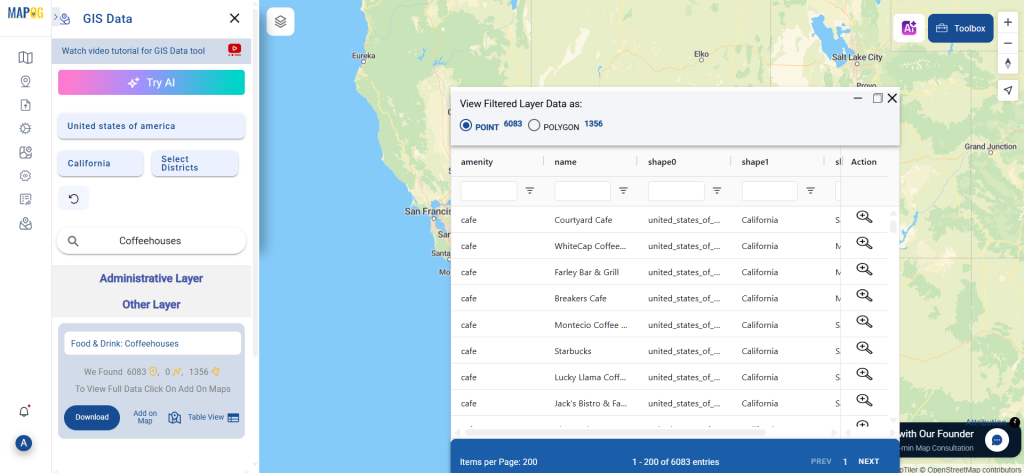
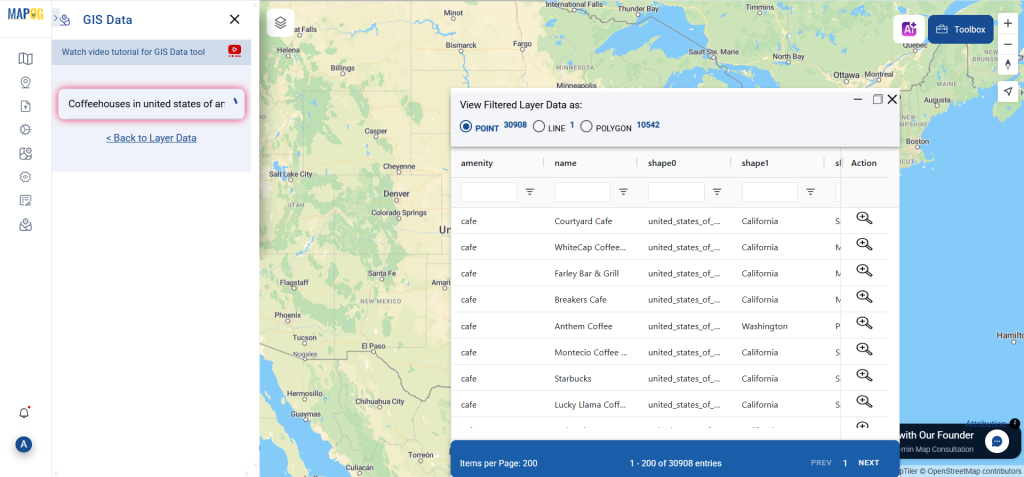
Begin by navigating through the MAPOG interface. Use the “Search Layer” feature and type in “Coffeehouses Data.” Check available attributes to see whether the dataset is offered as points, polygons, or both—depending on location density and coverage.

Download Coffeehouses Data
Step 2: Use AI Search Tool

Accelerate your search using the “Try AI” option. By entering simple prompts like “Coffeehouses in any areas” or “Cafés in any state,” the AI assistant instantly pulls up the most relevant layers—saving you time and ensuring precision in results.

Download Coffeehouses Data
Step 3: Apply Data Filters

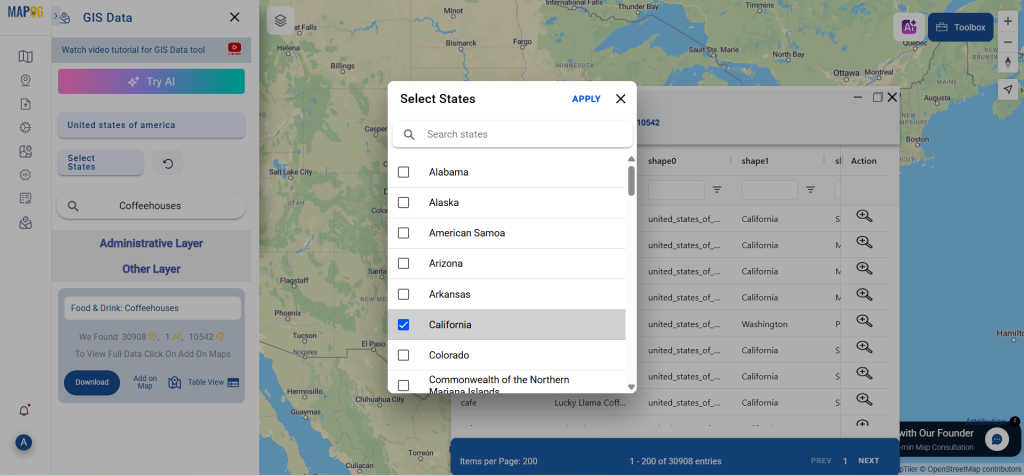
Narrow down results using the Filter Data tool. This feature lets you filter by state and district, allowing for highly localized data extraction. When dealing with broader datasets, this option helps dive deeper into specific regions for targeted analysis.

Download Coffeehouses Data
Step 4: Visualize with “Add on Map”

With the Add on Map feature, users can overlay selected coffeehouse layers directly onto an interactive analysis map. This allows real-time visualization of café distribution, customer reach, and urban coffee culture patterns—critical for business strategy or research.

Download Coffeehouses Data
Step 5: Download Coffeehouses Data

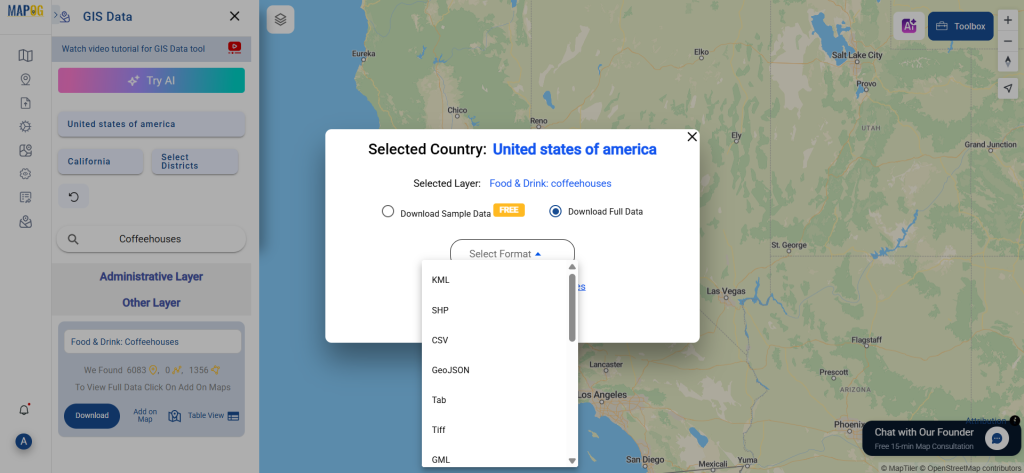
Once satisfied with the dataset, proceed to download. Choose between a sample or complete dataset, then select the format you need—Shapefile, KML, MID, or any other supported type. Agree to the usage terms and click download.

Download Coffeehouses Data

Final Thoughts

With GIS Data by MAPOG, the process to Download Coffeehouses Data becomes streamlined, insightful, and customizable. Whether you’re working on business expansion, city planning, or academic research, this platform ensures that you get reliable and flexible GIS data in the format you need. From visual exploration to in-depth spatial analysis, Download Coffeehouses Data today and turn location insights into actionable outcomes.

With MAPOG’s versatile toolkit, you can effortlessly upload vector and upload Excel or CSV data, incorporate existing layers, perform polyline splitting, use the converter for various formats, calculate isochrones, and utilize the Export Tool.

For any questions or further assistance, feel free to reach out to us at support@mapog.com. We’re here to help you make the most of your GIS data.

Download Shapefile for the following:

  1. World Countries Shapefile
  2. Australia
  3. Argentina
  4. Austria
  5. Belgium
  6. Brazil
  7. Canada
  8. Denmark
  9. Fiji
  10. Finland
  11. Germany
  12. Greece
  13. India
  14. Indonesia
  15. Ireland
  16. Italy
  17. Japan
  18. Kenya
  19. Lebanon
  20. Madagascar
  21. Malaysia
  22. Mexico
  23. Mongolia
  24. Netherlands
  25. New Zealand
  26. Nigeria
  27. Papua New Guinea
  28. Philippines
  29. Poland
  30. Russia
  31. Singapore
  32. South Africa
  33. South Korea
  34. Spain
  35. Switzerland
  36. Tunisia
  37. United Kingdom Shapefile
  38. United States of America
  39. Vietnam
  40. Croatia
  41. Chile
  42. Norway
  43. Maldives
  44. Bhutan
  45. Colombia
  46. Libya
  47. Comoros
  48. Hungary
  49. Laos
  50. Estonia
  51. Iraq
  52. Portugal
  53. Azerbaijan
  54. Macedonia
  55. Romania
  56. Peru
  57. Marshall Islands
  58. Slovenia
  59. Nauru
  60. Guatemala
  61. El Salvador
  62. Afghanistan
  63. Cyprus
  64. Syria
  65. Slovakia
  66. Luxembourg
  67. Jordan
  68. Armenia
  69. Haiti And Dominican Republic
  70. Malta
  71. Djibouti
  72. East Timor
  73. Micronesia
  74. Morocco
  75. Liberia
  76. Kosovo
  77. Isle Of Man
  78. Paraguay
  79. Tokelau
  80. Palau
  81. Ile De Clipperton
  82. Mauritius
  83. Equatorial Guinea
  84. Tonga
  85. Myanmar
  86. Thailand
  87. New Caledonia
  88. Niger
  89. Nicaragua
  90. Pakistan
  91. Nepal
  92. Seychelles
  93. Democratic Republic of the Congo
  94. China
  95. Kenya
  96. Kyrgyzstan
  97. Bosnia Herzegovina
  98. Burkina Faso
  99. Canary Island
  100. Togo
  101. Israel And Palestine
  102. Algeria
  103. Suriname
  104. Angola
  105. Cape Verde
  106. Liechtenstein
  107. Taiwan
  108. Turkmenistan
  109. Tuvalu
  110. Ivory Coast
  111. Moldova
  112. Somalia
  113. Belize
  114. Swaziland
  115. Solomon Islands
  116. North Korea
  117. Sao Tome And Principe
  118. Guyana
  119. Serbia
  120. Senegal And Gambia
  121. Faroe Islands
  122. Guernsey Jersey
  123. Monaco
  124. Tajikistan
  125. Pitcairn

Disclaimer : The GIS data provided for download in this article was initially sourced from OpenStreetMap (OSM) and further modified to enhance its usability. Please note that the original data is licensed under the Open Database License (ODbL) by the OpenStreetMap contributors. While modifications have been made to improve the data, any use, redistribution, or modification of this data must comply with the ODbL license terms. For more information on the ODbL, please visit OpenStreetMap’s License Page.

Here are some blogs you might be interested in:

Download Maritime Boundary Data in Shapefile, KML, MID +15 GIS Formats

Need accurate coastal and marine boundary information? Now you can Download Maritime Boundary Data with ease using GIS Data by MAPOG. This intuitive platform supports over 15 GIS formats, including Shapefile, KML, GeoJSON, and MID, making it suitable for a wide range of geospatial tools. Whether you’re involved in marine conservation, coastal planning, or international boundary studies, MAPOG provides structured, ready-to-use datasets for seamless visualization and spatial analysis.

How to Download Maritime Boundary Data with MAPOG

The process is efficient and user-focused, offering access to maritime datasets across global water bodies. With over 900+ GIS layers and 200+ data themes, MAPOG ensures accessibility in formats like SHP, KML, MIF, DXF, CSV, GeoJSON, SQL, TOPOJSON, and GPX. This flexibility empowers professionals, researchers, and students alike.

Download Maritime Boundary Data of any countries

Note:
  • All data is provided in GCS datum EPSG:4326 WGS84 CRS (Coordinate Reference System).
  • Users need to log in to access and download their preferred data formats.

Step-by-Step Guide to Download Maritime Boundary Data

Step 1: Search Maritime Boundary Layer

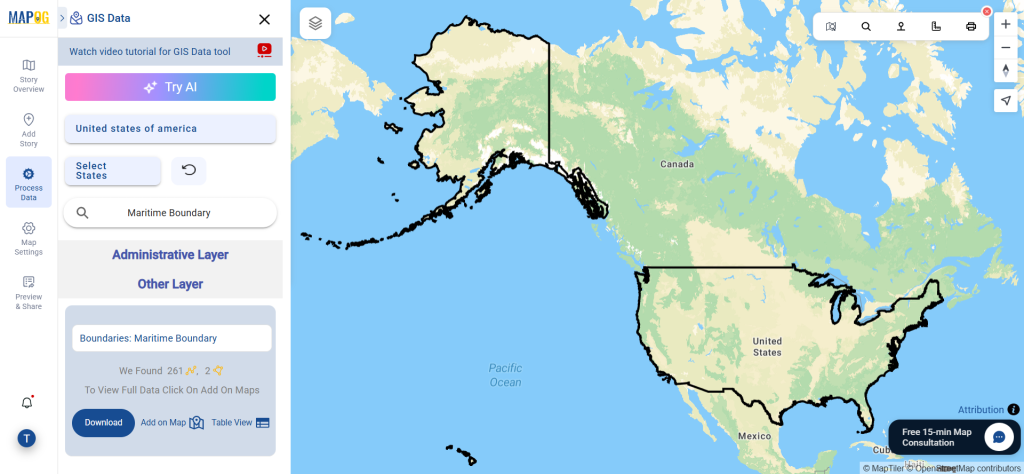
Begin by navigating through the MAPOG interface and using the search function to find “Maritime Boundary Data.” Each layer includes detailed metadata and geometry type—whether it’s a line representing maritime zones or a polygon for exclusive zones.

Download Maritime Boundary Data

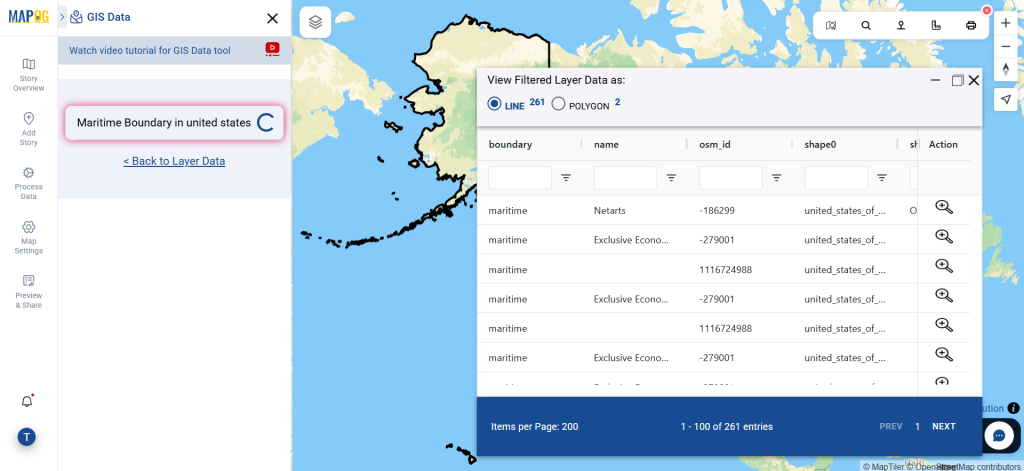
Speed up your search using MAPOG’s “Try AI” feature. Just type queries like “Exclusive zones” or “Maritime boundaries near coastlines,” and the system instantly fetches relevant datasets. This feature is particularly helpful for new users or those exploring specific marine areas.

Download Maritime Boundary Data
Step 3: Filter by Region

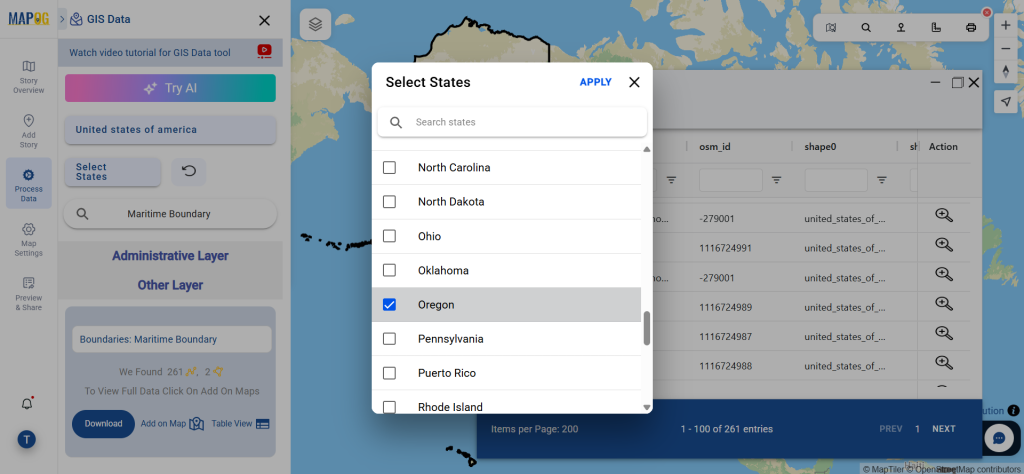
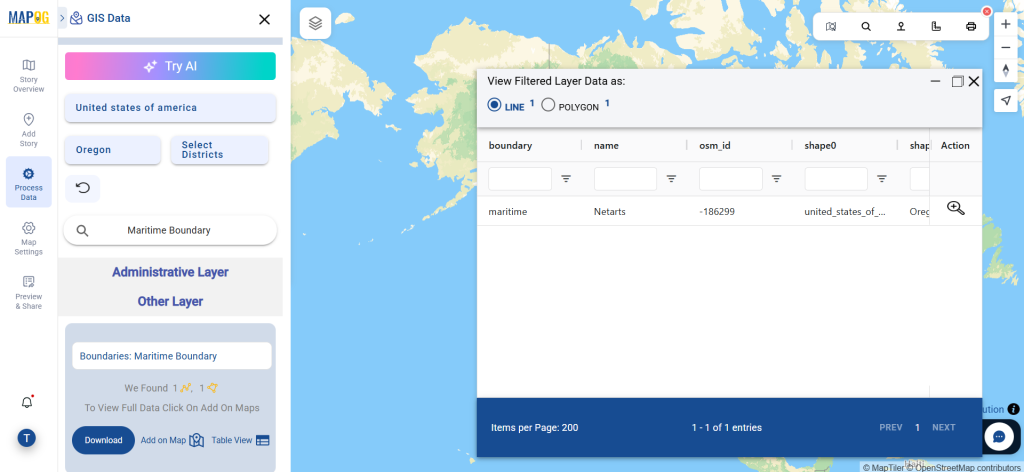
Use the Filter Data option to narrow your dataset by region, state, or district-level boundaries when applicable. This makes it easier to retrieve precise data, especially for local marine management, coastal development, or spatial policy-making.

Download Maritime Boundary Data
Step 4: Add Layers to Map for Visualization

Click on the “Add on Map” option to view your selected maritime boundary layers in the analysis interface. This helps in examining overlaps, nearby zones, and distances—crucial for maritime planning and dispute resolution.

Download Maritime Boundary Data
Step 5: Download Maritime Boundary Data

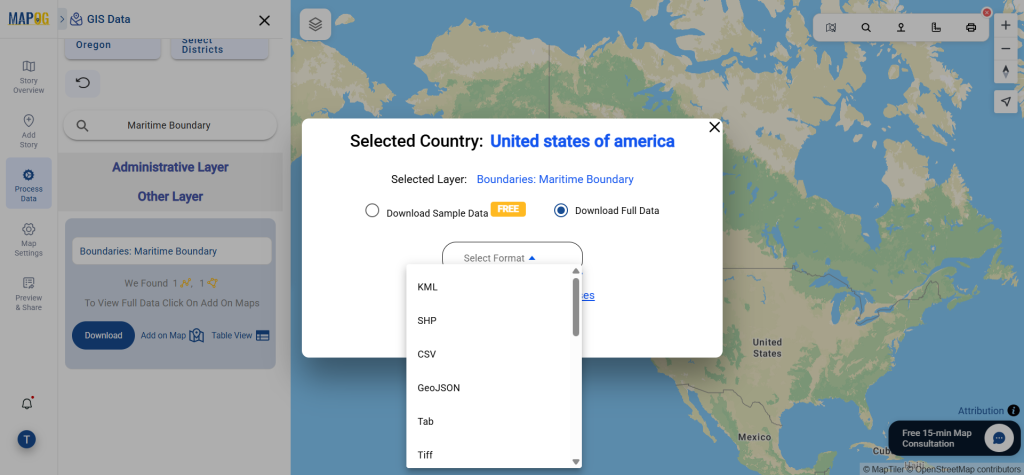
Once the layer is finalized, select the “Download” button. Choose from a sample or full dataset, select the preferred format (such as Shapefile, KML, MID, GeoJSON, etc.), agree to the terms, and complete the download process. The data can then be imported into platforms like QGIS, ArcGIS, or AutoCAD for further use.

Download Maritime Boundary Data

Final Thoughts

With a few clicks, you can now Download Maritime Boundary Data in the format that best suits your GIS workflow. MAPOG’s rich repository, AI-powered search, and map-based tools make it a powerful resource for accessing high-quality geographic data. Whether you’re analyzing coastal zones or mapping maritime jurisdiction, this platform offers everything you need to make informed, data-driven decisions.

With MAPOG’s versatile toolkit, you can effortlessly upload vector and upload Excel or CSV data, incorporate existing layers, perform Split polygon by line, use the converter for various formats, calculate isochrones, and utilize the Export Tool.

For any questions or further assistance, feel free to reach out to us at support@mapog.com. We’re here to help you make the most of your GIS data.

Download Shapefile for the following:

  1. World Countries Shapefile
  2. Australia
  3. Argentina
  4. Austria
  5. Belgium
  6. Brazil
  7. Canada
  8. Denmark
  9. Fiji
  10. Finland
  11. Germany
  12. Greece
  13. India
  14. Indonesia
  15. Ireland
  16. Italy
  17. Japan
  18. Kenya
  19. Lebanon
  20. Madagascar
  21. Malaysia
  22. Mexico
  23. Mongolia
  24. Netherlands
  25. New Zealand
  26. Nigeria
  27. Papua New Guinea
  28. Philippines
  29. Poland
  30. Russia
  31. Singapore
  32. South Africa
  33. South Korea
  34. Spain
  35. Switzerland
  36. Tunisia
  37. United Kingdom Shapefile
  38. United States of America
  39. Vietnam
  40. Croatia
  41. Chile
  42. Norway
  43. Maldives
  44. Bhutan
  45. Colombia
  46. Libya
  47. Comoros
  48. Hungary
  49. Laos
  50. Estonia
  51. Iraq
  52. Portugal
  53. Azerbaijan
  54. Macedonia
  55. Romania
  56. Peru
  57. Marshall Islands
  58. Slovenia
  59. Nauru
  60. Guatemala
  61. El Salvador
  62. Afghanistan
  63. Cyprus
  64. Syria
  65. Slovakia
  66. Luxembourg
  67. Jordan
  68. Armenia
  69. Haiti And Dominican Republic
  70. Malta
  71. Djibouti
  72. East Timor
  73. Micronesia
  74. Morocco
  75. Liberia
  76. Kosovo
  77. Isle Of Man
  78. Paraguay
  79. Tokelau
  80. Palau
  81. Ile De Clipperton
  82. Mauritius
  83. Equatorial Guinea
  84. Tonga
  85. Myanmar
  86. Thailand
  87. New Caledonia
  88. Niger
  89. Nicaragua
  90. Pakistan
  91. Nepal
  92. Seychelles
  93. Democratic Republic of the Congo
  94. China
  95. Kenya
  96. Kyrgyzstan
  97. Bosnia Herzegovina
  98. Burkina Faso
  99. Canary Island
  100. Togo
  101. Israel And Palestine
  102. Algeria
  103. Suriname
  104. Angola
  105. Cape Verde
  106. Liechtenstein
  107. Taiwan
  108. Turkmenistan
  109. Tuvalu
  110. Ivory Coast
  111. Moldova
  112. Somalia
  113. Belize
  114. Swaziland
  115. Solomon Islands
  116. North Korea
  117. Sao Tome And Principe
  118. Guyana
  119. Serbia
  120. Senegal And Gambia
  121. Faroe Islands
  122. Guernsey Jersey
  123. Monaco
  124. Tajikistan
  125. Pitcairn

Disclaimer : The GIS data provided for download in this article was initially sourced from OpenStreetMap (OSM) and further modified to enhance its usability. Please note that the original data is licensed under the Open Database License (ODbL) by the OpenStreetMap contributors. While modifications have been made to improve the data, any use, redistribution, or modification of this data must comply with the ODbL license terms. For more information on the ODbL, please visit OpenStreetMap’s License Page.

Here are some blogs you might be interested in:

How to Convert MapInfo Files to GPKG (GeoPackage) Format: Step-by-Step Guide

File conversion plays a vital role in the GIS workflow, as it allows data to be used effectively across different platforms and applications. In this context, the Converter Tool in MAPOG simplifies the entire process, making data conversion quick and efficient between various formats.

What is MapInfo File?

MapInfo Professional, a widely used geographic information system software, works with a file format known as a MapInfo file. This format stores geographic data such as boundaries, points of interest, and maps. Moreover, it supports building and analyzing maps, which proves highly useful in fields like environmental studies, urban planning, and many other applications involving spatial data.

Online GIS Data Conversion

Key Concept for Conversion MapInfo to GPKG:

To bridge the gap between formats, the Converter Tool in MAPOG offers a user-friendly platform. In addition, its intuitive design ensures that users can carry out conversions without unnecessary complexity. Consequently, even tasks that might seem challenging become easier to complete. Furthermore, this accessibility empowers a wider range of users, from beginners to professionals, to manage their data effectively.

Step-by-Step Guide to Converting MapInfo to GPKG

Step 1: Upload the Data

Open MAPOG and navigate to the Process Data option. From that option, select the Converter Tool option. Ensure that your MapInfo file is ready for conversion before uploading it.

MAPINFO TO GPKG

To begin the conversion, upload your MapInfo file by selecting the data you want to convert.

MAPINFO TO GPKG
Step 2: Select the Format for Conversion

Next, choose GPKG as your output format. This step allows you to identify the target format for your data, ensuring that it is compatible with applications that support the GeoPackage standard.

MAPINFO TO GPKG
Step 3: Choose the Output Coordinate Reference System (CRS)

Select the appropriate Coordinate Reference System for your GPKG file based on your specific requirements. This ensures that your data is correctly georeferenced, which is crucial for accurate mapping and analysis.

MAPINFO TO GPKG
Step 4: Execute the Conversion

Once your options are set, finish the conversion process. The tool will successfully process the MapInfo file, converting it into the GPKG format.

MAPINFO TO GPKG
Step 5: Review and Download

After the conversion is complete, review the output to ensure that the data has been accurately converted. Finally, download the GPKG file, which is now ready for further analysis.

MAPINFO TO GPKG

Conclusion:

The MAPOG Converter Tool simplifies the process of converting data between different formats, making it an invaluable resource for GIS professionals. By following these simple steps, you can easily convert MapInfo files to GPKG format, ensuring that your data is ready for a wide range of applications. If you need to download any data file in CSV or in any other formats like KML, DXF, TOPOJSON. visit GIS DATA. Here we have 900+ data layers for 200+ countries.

Additional Tools for Further Analysis:

With MAPOG’s versatile toolkit, you can effortlessly upload vectors and upload Excel or CSV data, incorporate existing layers, perform polygon splitting, use the converter for various formats, calculate isochrones, and utilize the Export Tool.

Learn About MAPOG:

For users who wish to create dynamic and eye-catching maps that visually engage, MAPOG is ideal. By combining maps with multimedia components like text and photographs, it enables you to create compelling stories. Making shareable content is simple with MAPOG, whether you’re leading a tour, presenting research, or promoting a project.

Here are some other blogs you might be interested in:

How to Convert MapInfo Files to DXF Format: Step-by-Step Guide

File conversion is a vital part of the GIS process, and moreover, it ensures that data remains usable for a variety of purposes. In addition, this procedure becomes much simpler with the Converter Tool in MAPOG, which allows users to convert data between formats easily and quickly.

What is MapInfo File?

MapInfo Professional, a widely used geographic information system software, works with a file format known as a MapInfo file. This format stores geographic data such as boundaries, points of interest, and maps. Moreover, it supports building and analyzing maps, which proves highly useful in fields like environmental studies, urban planning, and many other applications involving spatial data.

Online GIS Data Conversion

Key Concept for Conversion MapInfo to DXF:

Furthermore, the Converter Tool in MAPOG provides an easy-to-use interface for switching data across formats. As a result, the conversion process feels straightforward and, at the same time, easier to understand because of its clear concept.

Step-by-Step Guide to Converting MapInfo to DXF

Step 1: Upload the Data

Go to the MAPOG’s “Process Data” section to get started. Choose the “Converter Tool” menu option. Make sure your MapInfo file is prepared for conversion before uploading it.

MapInfo Files to DXF

To begin the conversion, upload your MapInfo file by selecting the data you want to convert.

MapInfo Files to DXF
Step 2: Select the Format for Conversion

Select DXF as the format for output. Ensuring that your data can be utilized in GIS software, which is necessary for engineering and architectural applications, is why this step is so important.

MapInfo Files to DXF
Step 3: Choose the Output Coordinate Reference System (CRS)

For DXF files, choosing the appropriate CRS is crucial, particularly when working with geospatial data for accurate location in GIS programs.

MapInfo Files to DXF
Step 4: Execute the Conversion

Once you have selecting, start the conversion. Your MapInfo file can be effectively converted to DXF format by the MAPOG program, allowing it to be used for GIS analysis.

MapInfo Files to DXF
Step 5: Review and Download

Check the output after the conversion and download it.

MapInfo Files to DXF

Conclusion:

The MAPOG Converter Tool is a crucial tool that makes converting data between different formats easier. These simple instructions will help you convert MapInfo files to DXF format with easy, ensuring that your data is ready for a variety of uses, particularly those that require correct planning and design. If you need to download any data file in MapInfo or in any other formats like GEOJSON, GPS, GPX. visit GIS DATA. Here we have 900+ data layers for 200+ countries.

Additional Tools for Further Analysis:

With MAPOG’s versatile toolkit, you can effortlessly upload vectors and upload Excel or CSV data, incorporate existing layers, perform polygon splitting, use the converter for various formats, calculate isochrones, and utilize the Export Tool.

Learn About MAPOG:

MAPOG is perfect for people who want to use visually striking and interactive maps to make their data come to life. It lets you build engaging narratives by connecting maps with visuals like text and images. Producing shareable content is made easy with MAPOG, whether you’re marketing a project, giving a tour or presenting research.

Here are some other blogs you might be interested in:

How to Convert MIF to KML Format Online | Online GIS Data Converter

This guide provides detailed instructions on how to convert a MIF file into KML format using the Converter Tool in MAPOG. Whether you’re just starting out with MAPOG or have some prior experience, this tutorial will guide you through the process of converting your MIF files into KML effortlessly.

What is MIF Data Format:

MIF files are also known as MapInfo Interchange Format files, and often end in a .mif suffix. This format — developed and used by MapInfo for the export of maps and data — contains the data necessary for plotting map features (such as points, lines, or polygons) on a map. MIF files are often accompanied by MID files. MID files contain data attributes, but are not a mandatory addition to the MIF file format.

Online GIS Data Conversion

Converting MIF Data into KML Format:

Converter Tool in MAPOG allows users to effortlessly convert data between various formats according to their specific requirements. This tool streamlines the data transformation process for multiple GIS applications, providing both flexibility and efficiency in managing different file types. For example, MAPOG’s Converter Tool can convert MIF data into KML format, optimizing file size while retaining critical geographic information. This conversion enhances the data’s compatibility with web-based mapping and interactive platforms, ultimately improving workflows and significantly boosting the usability of GIS data.

                             Steps to Convert MIF to KML:

Step 1: Upload the Data:

  1. Navigate to the header and click on “Process Data,” then select the “Converter Tool” option.
MIF TO KML

2.To begin the conversion, upload your MIF file by selecting the data you want to convert.

MIF TO KML

Step 2: Select the Output Format:

  1. Choose KML as the desired output format for exporting your data. While the Converter Tool provides several format options, this guide is specifically tailored to converting your file into the KML format.
MIF TO KML

2. You can also set the Output Coordinate Reference System (CRS) according to your spatial analysis requirements.

MIF TO KML

Step 3: Perform the Conversion:

Navigate to the ‘Convert Files’ section and allow the tool to handle the conversion process. Just upload your MIF file, and the Converter Tool will seamlessly convert it into KML format, providing an efficient and hassle-free experience.

MIF TO KML

Step 4: Verify and Download:

Inspect your converted KML data to confirm its correctness. After ensuring the results meet your expectations, proceed to download the file. This step is crucial to validate that the conversion was completed successfully and that your data integrity is maintained.

MIF TO KML
Additional Tools for Further Analysis:

With MAPOG’s versatile toolkit, you can effortlessly upload vectors and upload Excel or CSV data, incorporate existing layers, perform polygon splitting, use the converter for various formats, calculate isochrones, and utilize the Export Tool.

You might also find these blogs helpful:

Download Vacation Homes Data in Shapefile, KML, MID & more

Looking to explore or map out vacation home locations across various regions? Now you can Download Vacation Homes Data seamlessly using the GIS Data by MAPOG platform. Whether you’re working on tourism analysis, real estate planning, or lifestyle research, MAPOG offers well-organized, up-to-date spatial datasets in over 15+ GIS formats—Shapefile, KML, GeoJSON, MID, and many more—making integration with your favorite GIS tools smooth and effortless.

How to Download Vacation Homes Data

The MAPOG platform is designed to simplify the entire process. Covering data from thousands of layers, it offers unmatched versatility through a wide range of export formats—CSV, DXF, SQL, MIF, TOPOJSON, GPX, and more—perfect for both technical and academic purposes.

Download Vacation Homes Data of any countries

Note:
  • All data is provided in GCS datum EPSG:4326 WGS84 CRS (Coordinate Reference System).
  • Users need to log in to access and download their preferred data formats.

Step-by-Step Guide to Access and Download Vacation Homes Data

Step 1: Search for Vacation Homes Layer

Start by navigating to the GIS Data by MAPOG interface. Use the search function and type “Vacation Homes Data.” You’ll see available layers categorized by geometry (point or polygon) with detailed attributes like capacity, property type, and operational status.

Download Vacation Homes Data
Step 2: Use the AI-Powered Search Tool

Leverage the “Try AI” feature to find exactly what you need. Enter prompts like “Vacation homes near city” or “leisure properties in rural areas” and let MAPOG’s intelligent search bring back the most relevant datasets in seconds.

Download Vacation Homes Data
Step 3: Filter by Region

Narrow your search further using the Filter Data option. This allows you to drill down to state or district levels, especially useful when working with broader country-wide datasets. With just a few clicks, you get highly localized data ready for deep analysis.

Download Vacation Homes Data
Step 4: Add Layers with ‘Add on Map’

Want to preview before downloading? Use the Add on Map button to overlay your chosen data directly onto the interactive map interface. This lets you analyze spatial patterns, distribution trends, and potential gaps visually before taking the next step.

Download Vacation Homes Data
Step 5: Download Vacation Homes Data

Once you’re confident about the dataset, simply click “Download Data.” Choose between a sample or full version, select your preferred format—whether it’s Shapefile, KML, MID, or others—agree to the terms, and proceed with the download. Please note that users must be logged in to access full download features.

Download Vacation Homes Data

Final Thoughts

With GIS Data by MAPOG, it’s easier than ever to Download Vacation Homes Data in the format that best fits your GIS workflow. From planning vacation zones to analyzing property trends, this tool provides flexible and comprehensive access to geographic datasets. So whether you’re a real estate analyst, a tourism planner, or a GIS learner, you’ll find MAPOG a reliable companion for spatial exploration. Just log in, filter your region, and download Vacation Homes Data that aligns perfectly with your project goals.

With MAPOG’s versatile toolkit, you can effortlessly upload vector and upload Excel or CSV data, incorporate existing layers, perform Split polygon by line, use the converter for various formats, calculate isochrones, and utilize the Export Tool.

For any questions or further assistance, feel free to reach out to us at support@mapog.com. We’re here to help you make the most of your GIS data.

Download Shapefile for the following:

  1. World Countries Shapefile
  2. Australia
  3. Argentina
  4. Austria
  5. Belgium
  6. Brazil
  7. Canada
  8. Denmark
  9. Fiji
  10. Finland
  11. Germany
  12. Greece
  13. India
  14. Indonesia
  15. Ireland
  16. Italy
  17. Japan
  18. Kenya
  19. Lebanon
  20. Madagascar
  21. Malaysia
  22. Mexico
  23. Mongolia
  24. Netherlands
  25. New Zealand
  26. Nigeria
  27. Papua New Guinea
  28. Philippines
  29. Poland
  30. Russia
  31. Singapore
  32. South Africa
  33. South Korea
  34. Spain
  35. Switzerland
  36. Tunisia
  37. United Kingdom Shapefile
  38. United States of America
  39. Vietnam
  40. Croatia
  41. Chile
  42. Norway
  43. Maldives
  44. Bhutan
  45. Colombia
  46. Libya
  47. Comoros
  48. Hungary
  49. Laos
  50. Estonia
  51. Iraq
  52. Portugal
  53. Azerbaijan
  54. Macedonia
  55. Romania
  56. Peru
  57. Marshall Islands
  58. Slovenia
  59. Nauru
  60. Guatemala
  61. El Salvador
  62. Afghanistan
  63. Cyprus
  64. Syria
  65. Slovakia
  66. Luxembourg
  67. Jordan
  68. Armenia
  69. Haiti And Dominican Republic
  70. Malta
  71. Djibouti
  72. East Timor
  73. Micronesia
  74. Morocco
  75. Liberia
  76. Kosovo
  77. Isle Of Man
  78. Paraguay
  79. Tokelau
  80. Palau
  81. Ile De Clipperton
  82. Mauritius
  83. Equatorial Guinea
  84. Tonga
  85. Myanmar
  86. Thailand
  87. New Caledonia
  88. Niger
  89. Nicaragua
  90. Pakistan
  91. Nepal
  92. Seychelles
  93. Democratic Republic of the Congo
  94. China
  95. Kenya
  96. Kyrgyzstan
  97. Bosnia Herzegovina
  98. Burkina Faso
  99. Canary Island
  100. Togo
  101. Israel And Palestine
  102. Algeria
  103. Suriname
  104. Angola
  105. Cape Verde
  106. Liechtenstein
  107. Taiwan
  108. Turkmenistan
  109. Tuvalu
  110. Ivory Coast
  111. Moldova
  112. Somalia
  113. Belize
  114. Swaziland
  115. Solomon Islands
  116. North Korea
  117. Sao Tome And Principe
  118. Guyana
  119. Serbia
  120. Senegal And Gambia
  121. Faroe Islands
  122. Guernsey Jersey
  123. Monaco
  124. Tajikistan
  125. Pitcairn

Disclaimer : The GIS data provided for download in this article was initially sourced from OpenStreetMap (OSM) and further modified to enhance its usability. Please note that the original data is licensed under the Open Database License (ODbL) by the OpenStreetMap contributors. While modifications have been made to improve the data, any use, redistribution, or modification of this data must comply with the ODbL license terms. For more information on the ODbL, please visit OpenStreetMap’s License Page.

Here are some blogs you might be interested in:
💬 Book a Meeting